What Is a Gift Card and How Square Merchants Can Use One
What Is a Gift Card. Learn what a gift card is, how closed-loop and digital gift cards work for Square merchants, and how to turn them into a referral reward
Saturday afternoon is when a gift card stops being a nice extra and becomes part of the way your business runs. At the front desk, a regular wants a $100 card for her sister's birthday. A walk-in asks to reload the card she bought online last week. Meanwhile, a stylist mentions that a new client came through a friend's referral and used a code for a complimentary add-on.
Those three customers are doing different things. The first is buying prepaid stored value. The second has a built-in reason to return. The third is responding to an automated referral reward. For a Square salon, barbershop, spa, or fitness studio, one gift card can support all three jobs.
Table of Contents
- The Moment a Gift Card Actually Matters
- What a Gift Card Really Is
- The Main Types of Gift Cards Owners Will See
- How Gift Cards Work Inside the Square Ecosystem
- Why Gift Cards Are Useful for Salons, Spas, and Studios
- Turning Gift Cards Into Referral Rewards With ViralRef
- Best Practices for Selling, Tracking, and Protecting Gift Cards
- From Simple Product to Repeat-Business Engine
The Moment a Gift Card Actually Matters
The customer buying the birthday card isn't mainly interested in your payment setup. She wants to give her sister an easy, useful experience at a place she already trusts. Once the card is paid for, your business has received the money, but the service hasn't happened yet.
That distinction matters. A gift card creates an obligation to provide goods or services later. When the recipient books a haircut, color appointment, massage, facial, or class, the card balance pays for part or all of that visit. The transaction is simple for the customer, but the balance still needs to be visible and accurate for the owner.
The online buyer presents a different opportunity. She already has credit connected to your shop, so the next appointment feels easier to justify. A remaining balance can bring her back for a trim, a blowout, a brow service, or another class instead of leaving the relationship at a single visit.
Practical rule: Treat every outstanding balance as both an accounting responsibility and a future appointment opportunity.
The referred new client adds the growth angle. Her friend has already done the hardest part of local marketing, building trust. If the reward arrives as a real Square gift card rather than a vague promise or a discount code, the referrer has a clear reason to share again, and the reward stays usable inside your business.
That's the practical answer to what is a gift card for a service-business owner. It's stored value, a return-visit hook, and, when connected to a referral program, a way to thank customers without handing them cash or managing a spreadsheet.
What a Gift Card Really Is
A gift card is stored monetary value that a customer can redeem for products or services at a particular business or within a broader retail network. The card may be plastic, an email code, or a balance attached to a customer profile. The format changes, but the underlying promise stays the same: your business will accept the value later.
The customer journey usually follows a straightforward path:
- The buyer chooses a fixed denomination or enters a custom amount.
- She pays at the front desk, through your online store, or through another approved sales channel.
- She receives a physical card, digital code, or account balance.
- The recipient presents the card during a future purchase.
- Square checks the available balance and deducts the amount used.
- Any remaining value stays available for another visit.
The plastic card isn't the money. It's a way to identify the balance. A digital code does the same job through email or a phone screen. In-house store credit can skip the card entirely and sit on the customer's profile.
The accounting meaning
At the moment of sale, the cash you receive doesn't normally represent completed service revenue. Under accounting guidance, the issuer records the money as deferred revenue, or a stored-value liability, and recognizes revenue when the customer redeems the card. Unredeemed amounts may later be treated as breakage based on observed redemption patterns. Deloitte's accounting guidance explains the liability and redemption process.
For a Square merchant, that means the number on your gift card report isn't just a marketing figure. It represents value customers may still use. If a client spends part of a card on a service, Square needs to reduce the outstanding obligation by the redeemed amount while keeping the unused balance available.
Why the distinction helps owners
Suppose a client purchases a card for a future haircut and later uses only part of it for a service. The card isn't finished because the first visit is over. The remaining balance still belongs to the cardholder, and your staff should be able to find it without guessing.
That's why a reliable system matters more than the design of the card itself. A printed card can look premium, but if the balance isn't updated correctly, the experience breaks down at checkout. Digital delivery can be fast and convenient, but it still needs clear redemption rules and accurate records.
The Main Types of Gift Cards Owners Will See
Square merchants usually encounter four practical categories. The right choice depends on where customers should redeem the value, how much control you want over the relationship, and whether your business wants to keep the full redemption experience in-house.
A side-by-side comparison
| Type | Where It Works | Where Funds Sit | Square Support | Best For |
|---|---|---|---|---|
| Physical gift card | Usually at the issuing business or brand | Issuer's stored-value system | Square Gift Cards can support in-store sales and redemption | Front-desk gifting and visible retail presentation |
| E-gift card | At the issuing business through an emailed code or digital delivery | Issuer's stored-value system | Square supports digital gift-card workflows | Last-minute gifts, online purchases, and easy forwarding |
| In-house store credit | At the issuing business, often linked to a customer profile | Business or platform account | Can be managed through customer records and payment workflows | Refund alternatives, service recovery, and retention |
| Open-loop network card | Across participating merchants on a payment network | Issuer or prepaid-program provider | Not the same as a Square-native store gift card | Broad consumer spending outside one business |
Closed-loop value stays close to your shop
Physical cards, e-gift cards, and many forms of in-house credit are closed-loop products when customers can redeem them only at the issuing business or brand. That setup keeps redemption data in-house and avoids the card-network processing costs associated with open-loop products. Stripe's overview of gift-card processing compares closed-loop and open-loop cards.
For a barbershop, that control is useful. A gift card can be limited to haircuts, grooming services, retail products, or any combination your policy allows. Your team sees the redemption, the customer relationship stays with your business, and the balance can encourage another visit.
Open-loop cards offer reach, but less control
Open-loop cards carry network branding such as Visa or Mastercard and can be accepted more broadly. That flexibility comes with network fees and additional prepaid-product compliance requirements. The issuer also takes on more fraud and regulatory responsibility.
An open-loop card may suit a general gift buyer who doesn't know where the recipient shops. It usually isn't the cleanest tool for a salon owner trying to drive repeat bookings, because the recipient can spend the value elsewhere. If your goal is to keep revenue connected to your Square POS and Square Appointments workflow, a closed-loop option is easier to manage.
How Gift Cards Work Inside the Square Ecosystem
Square gives the owner one place to set up gift cards, sell them, redeem them, and review activity. In the Square Dashboard, you can enable Gift Cards, offer set denominations, or allow customers to choose a custom amount. The exact menu names and availability can change, so check your current Square settings before publishing a policy.
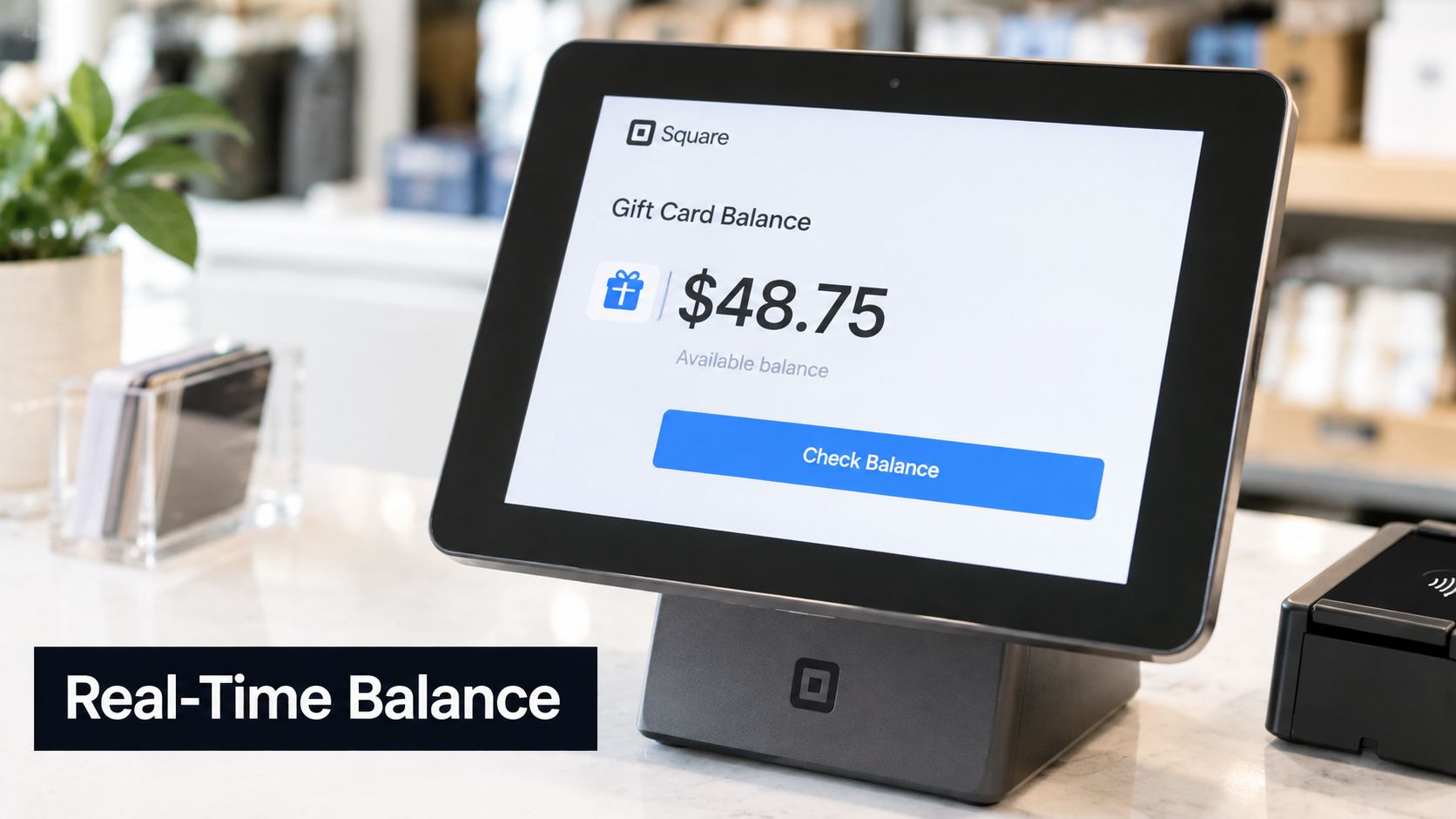
At checkout, Square POS can process a physical card through a barcode scan or number entry. A team member can look up the balance, apply the card to the purchase, and leave any unused value available. With Square Appointments, a client can book a service and use the balance against the resulting transaction, subject to the payment and gift-card settings on your account.
What the owner needs to watch
Gift-card sales, redemptions, and outstanding balances should remain easy to reconcile. A sale increases the stored-value liability. A redemption reduces it. A partial redemption leaves a smaller balance, and a refund may require careful review so the customer doesn't receive value twice.
Mobile purchases should feed the same customer and gift-card records when the Square setup supports that channel. Square Loyalty can also help connect purchasing behavior with repeat visits, but loyalty points and gift-card balances are different tools. Don't treat one as a substitute for the other.
A useful owner-facing explanation appears in this guide to gift card management software, especially when you're deciding how much of the process should stay inside Square and how much should be handled by an additional referral workflow.
Here's the Saturday example. A customer buys a $50 card on Friday. On Saturday morning, the recipient uses part of it toward a service, and Square records the redemption while leaving the remainder available for a later appointment. You don't need a handwritten note at the desk to remember what happened. The balance is the record.
Why Gift Cards Are Useful for Salons, Spas, and Studios
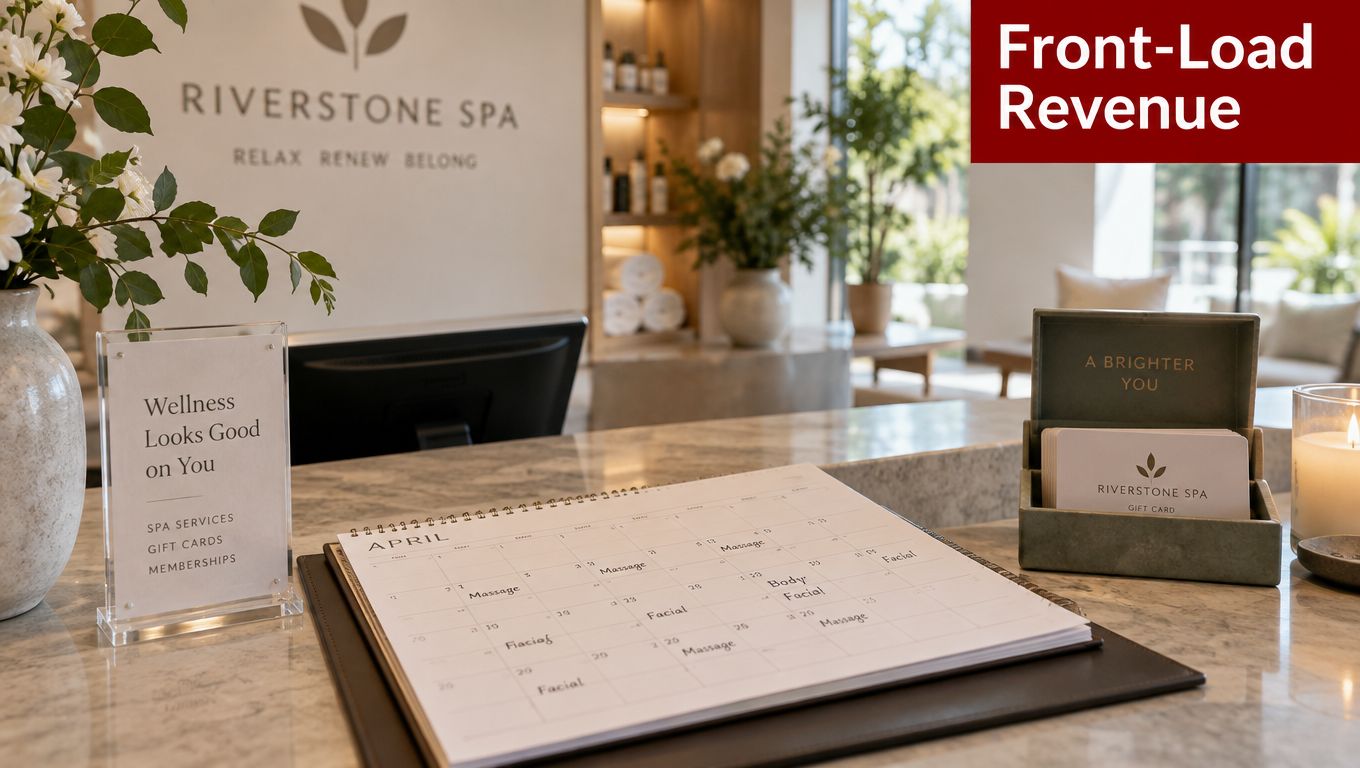
A gift card works especially well for services because the recipient still needs to book, attend, and experience the business. The card gets someone through the door, but the appointment creates the chance to sell the next visit, an add-on, retail product, or membership.
A color client might buy a balayage gift card for her sister. The recipient arrives as a first-time guest, discovers the salon's consultation process, and may add a treatment or schedule a future refresh. The gift buyer has effectively introduced the business through a personal recommendation, without requiring the salon to start with a cold advertisement.
A massage therapist can package a birthday gift around a single session or a broader service experience. A yoga studio can promote holiday cards that bring new people into January classes, then use a welcoming front-desk conversation to help them choose a regular schedule.
The recipient arrives with context
Gift recipients often arrive with a reason to try you. They may know the person who gave them the card, recognize the service name, or already have an idea of what they want. That context gives your staff a more natural opening than a generic sales pitch.
Prepaid value can also make a missed appointment feel more consequential to the customer, although it doesn't replace a clear cancellation policy. The card should never be used as an excuse to make redemption difficult. A frustrating balance lookup or unclear restriction can damage the trust the gift buyer transferred to your business.
A gift card should make the first visit easier, not turn the front desk into a policy debate.
The retention benefit comes from the second interaction. After the recipient uses the card, Square Appointments can support another booking, while Square Loyalty can recognize purchasing activity according to your loyalty rules. Your team still has to provide a good service and ask for the next appointment. The card creates the opening, not the relationship by itself.
For practical ideas on connecting rewards with repeat business, see this guide to a gift card rewards program. The important principle is simple: use the stored value to create a reason to return, then make the next booking easy before the customer leaves.
Turning Gift Cards Into Referral Rewards With ViralRef
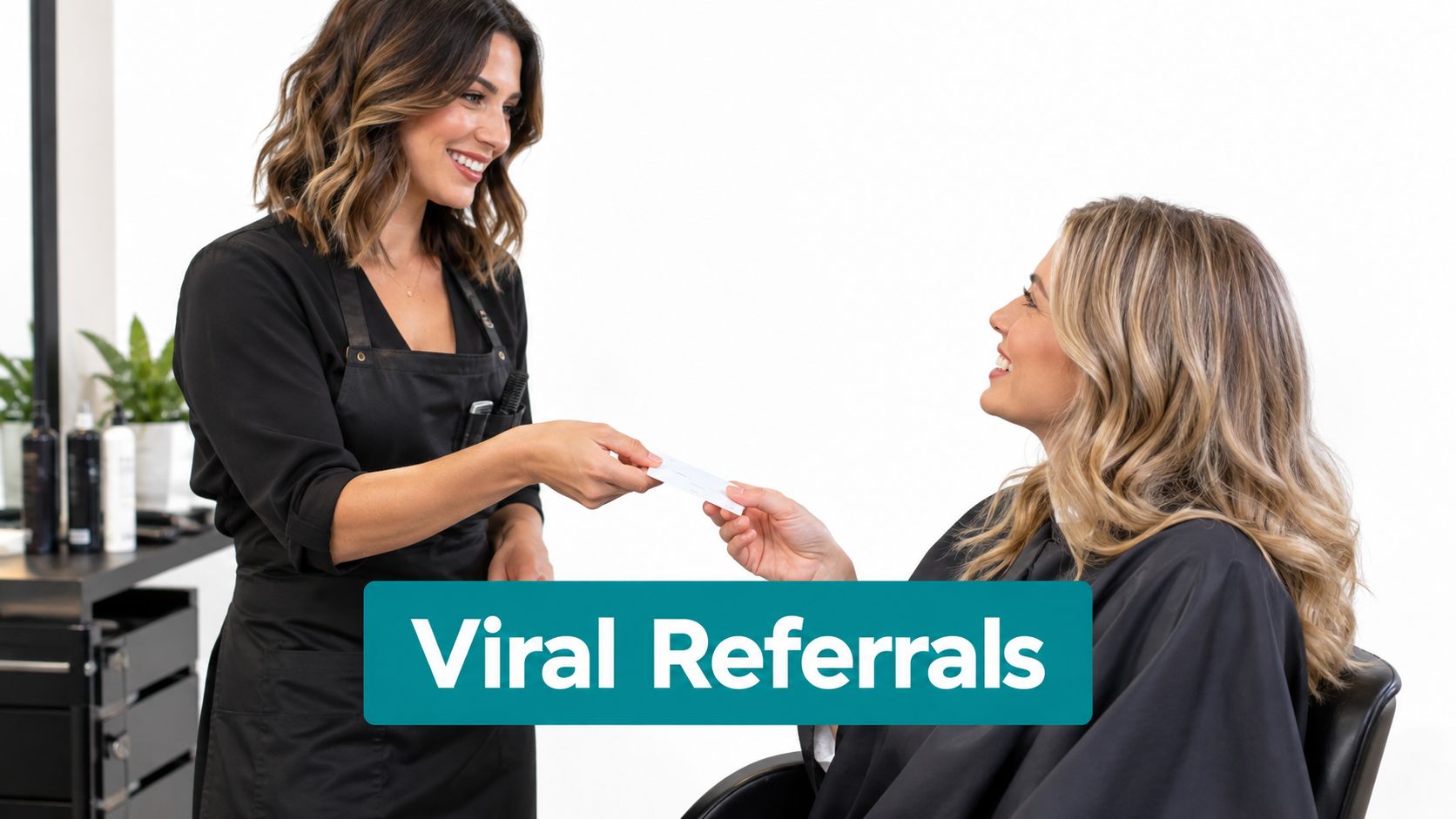
A Square gift card can reward a referral without asking your receptionist to create codes manually. The basic handoff is straightforward. A stylist shares a referral link with a satisfied color client, the client sends it to a friend, and the friend books through the tracked link.
After the referred friend checks out and pays, ViralRef can issue a Square gift card to the referrer's stored balance. The reward becomes usable value inside the business, rather than a message that someone has to remember to honor later.
A workable setup for a service business
Start with the Square side. Enable Square Gift Cards in the Dashboard, confirm how customers can buy and redeem them, and make sure your staff knows how to find balances at the register.
Then connect the referral workflow and choose the reward rules that match your margins. You might issue a reward after the referred customer completes a first visit, after a repeat visit, or after a defined spending threshold. The right trigger depends on whether you need more first appointments, stronger retention, or higher-value bookings.
A sensible operating sequence looks like this:
- Connect the account: Link the referral program to the Square environment your team already uses.
- Choose the reward: Set the gift-card denomination and decide whether both the referrer and new customer receive value.
- Define the conversion: Decide whether a paid first visit, repeat appointment, or spending condition qualifies.
- Share the link: Give customers a personal referral link, QR code, or shareable message.
- Review attribution: Use unique codes and UTM tracking to identify the source of each booking.
- Check redemption: Match issued rewards with redeemed balances so the team understands what drives visits.
With the right setup, the dashboard can show who referred whom, which gift cards were issued, and which rewards were redeemed. That visibility is more useful than a stack of paper cards because you can connect the reward to a real customer and transaction.
A gift card referral program works best when the reward feels like something the customer already values. A real Square balance can feel more useful than a generic discount code, particularly for a client who already plans to book another service.
ViralRef is the only referral program built natively for Square, and it supports Square gift-card rewards, customer referral links, attribution, and automated reward issuance. Keep the promise precise: the system can automate the handoff, but your service quality and follow-up still determine whether a new guest becomes a regular.
Best Practices for Selling, Tracking, and Protecting Gift Cards
A smooth gift-card program starts at the front desk. Keep physical cards visible, make e-gift delivery easy for last-minute buyers, and explain when a digital code will arrive. If you ship a physical card, set expectations clearly so a delayed package doesn't become a birthday problem.
Record gift-card sales as stored-value liability until redemption, and reconcile the outstanding balance regularly. Square reports can help you review what was sold, what was redeemed, and what remains available. Don't treat unredeemed value as ordinary service revenue just because the cash has already reached the account.
A short owner checklist
- Fulfillment: Offer physical cards at reception and digital cards through the channels your customers typically use.
- Reconciliation: Compare Square's sold, redeemed, and outstanding figures with your bookkeeping records.
- Fraud controls: Watch for duplicate card numbers, unusual redemption patterns, and cards purchased with stolen payment details.
- Redemption checks: For unusually large transactions, follow a consistent identity or transaction-verification policy.
- Customer policy: Put restrictions, fees, and expiration terms in clear language before purchase.
- Team training: Show every staff member how to check a balance, process a partial redemption, and handle a disputed card.
Federal rules prohibit a gift certificate, store gift card, or general-use prepaid card from expiring in less than 5 years, with the relevant clock for store and general-use cards tied to the date funds were last loaded. The expiration terms must be clearly disclosed under the federal CARD Act.
Inactivity or service fees generally can't apply during the first 12 months after purchase. After that, only one such fee per month is allowed when properly disclosed before purchase, according to the Consumer Financial Protection Bureau's gift-card guidance. State rules can be stricter. For example, New York requires cards bought on or after December 10, 2022 to remain valid for at least 9 years, prohibits inactivity fees, and limits a multi-merchant card to one activation fee capped at $9 under its updated gift-card rules.
For fraud-monitoring ideas that fit a referral workflow, review this fraud detection system. Your staff should still review suspicious activity rather than assuming every flagged transaction is fraudulent.
From Simple Product to Repeat-Business Engine
A gift card is more valuable when you stop treating it as a checkout-line product. A closed-loop card keeps the spending connected to your shop, Square reporting keeps the balance visible, and a referral reward can turn one happy customer into a source of new appointments.
That combination supports a practical growth loop. The buyer brings in prepaid value. The recipient experiences the service and has a reason to return. A satisfied client shares a referral link, and the resulting reward brings that client back again. This is the same retention thinking behind broader customer retention strategies, applied to a payment product your business already understands.
Audit your outstanding gift-card balances, choose a referral reward tied to a completed visit, and track how many new customers each issued reward brings in within 30 days. Then adjust the reward trigger based on the bookings and redemptions you can see.
ViralRef connects Square merchants with automated referral links, tracked attribution, and Square gift-card rewards that encourage repeat visits. Visit ViralRef to connect your Square business and turn gift-card value into a measurable word-of-mouth channel.
Related articles
Gift Card Management Software for Square Merchants
Gift card management software explained for salons, spas, and studios on Square. Learn features, benefits, common pitfalls, and how to automate rewards.
Gift Card Rewards Program: A Square Merchant Playbook
Build a gift card rewards program that fills your salon, barbershop, or studio calendar. Learn design choices, Square setup steps, and KPIs that matter.
What Is a Unique Visitor? a Guide for Square Merchants
Wondering what is a unique visitor? Learn what this metric means for your salon, spa, or studio and how to use it to measure referral success with ViralRef.