Referral Programs for Businesses: The Square Guide
Learn how referral programs for businesses work with Square. Boost client acquisition, automate rewards, and grow your salon or studio today.
A client finishes a haircut, facial, or personal-training session delighted. They tell the stylist, therapist, or coach, “My sister would love this.” Everyone smiles, the client leaves, and the referral disappears into the next appointment.
That lost moment is familiar to salon owners, barbershop owners, spa managers, and fitness studio operators. Word-of-mouth already drives a large share of local business. One industry compilation reports that 52% of small businesses call referrals their top source of new business, while word-of-mouth influences 20% to 50% of purchasing decisions according to the same compiled research (Firework's referral marketing statistics). The challenge isn't whether clients recommend you. It's making the recommendation easy to share, simple to track, and worthwhile for both people involved.
Referral programs for businesses work best when they fit the way you already serve customers. For a Square merchant, that means connecting the referral experience to Square POS, Square Appointments, and Square Loyalty, rather than adding another spreadsheet for the front desk to maintain. ViralRef is the only referral program built natively for Square, designed around that operational reality.
Table of Contents
- Turning Happy Clients into Your Best Marketing Asset
- Why Native Square Integration Matters for Growth
- Choosing Between Gift Cards and Auto-Apply Coupons
- Structuring Rewards for Staff and Affiliates
- Protecting Your Program from Fraud and Waste
- Real-World Examples from Salons and Studios
- Taking Action and Tracking Early Results
Turning Happy Clients into Your Best Marketing Asset
A client at a salon often decides to refer someone before she reaches the reception desk. She's just seen the result in the mirror, her stylist has explained how to maintain it, and she's already thinking of a friend who needs the same service. Asking her to remember a code, visit a separate website, or send the friend's details later creates enough friction to end the conversation.
The receptionist may feel awkward too. “Would you like to refer a friend?” can sound like a sales pitch immediately after a personal service. Staff don't want to interrupt a warm client moment with administration, and owners don't want employees collecting names in notebooks or trying to match referrals against later payments.

Remove the awkward ask
A good program changes the wording and the action. Instead of asking a client to “bring someone in,” give her a personal referral link or QR code she can share by text while the experience is still fresh. The message should lead with the friend's benefit, such as a welcome offer for a first visit, while making the client's reward clear without turning the exchange into a hard sell.
That approach reflects the broader principle behind keeping customers engaged after a positive experience. Retention and referrals are connected because returning clients are the people most able to describe your service candidly and recommend it with confidence.
Build the moment into the visit
Your team needs a repeatable prompt, not a complicated campaign. A stylist can mention the referral option during checkout. A spa therapist can point to a small card after a treatment. A fitness coach can share a link after a member compliments a class.
The customer shouldn't need an app. A phone-friendly portal, a share button, and a QR code are enough for most local service situations. The easier the action, the more likely the client is to complete it before moving on to work, errands, or the school run.
Practical rule: Ask for the referral when the client is expressing satisfaction, not during a generic marketing blast weeks later.
Referral marketing gives structure to word-of-mouth marketing. Organic recommendations still happen without you, but a structured program gives your team a way to recognize the referrer, welcome the new client, and understand which parts of the business generate introductions.
Why Native Square Integration Matters for Growth
A referral program fails on the floor when the owner has to reconcile separate systems. A client shares a discount code, the friend books by phone, the payment happens through Square POS, and someone later tries to decide whether the reward applies. That process creates missed credits, duplicate payouts, and uncomfortable conversations with loyal customers.
A native Square connection changes the workflow because the purchase already exists in the system you use to run the business. Square says its beauty tools connect payments, appointments, gift cards, and loyalty features across in-person and online channels, while Square Loyalty can enroll customers at checkout and track rewards through a phone number (Square's beauty and service tools).
What attribution should look like
Set the program up around the customer record rather than a manual coupon list.
- Connect the Square account. The referral platform should use the existing customer and payment flow instead of asking staff to create duplicate profiles.
- Give each customer a shareable identity. A personal link, QR code, or phone-based portal lets the client refer a friend without downloading software.
- Let the friend book or pay normally. The new client can use Square Appointments, pay at the counter through Square POS, or complete an invoice without asking staff to type a referral code.
- Match the completed payment. The system should recognize the referred customer and calculate the reward after the qualifying transaction.
- Show the result to the owner and referrer. Clients need to see whether a reward is pending or available, while managers need a clear record for review.
This matters especially for businesses where booking and payment happen at different times. A barbershop may take payment immediately, while a spa may invoice a package or collect payment after an appointment. A fitness studio may sell memberships online but process merchandise or add-ons at the desk.
Keep staff out of reconciliation
Your receptionist shouldn't need to search old texts to prove who referred whom. Your bookkeeper shouldn't have to compare a Square export with a second spreadsheet. The Square POS integration workflow should make attribution part of the payment process, not a task that gets postponed until the end of the week.
For Square merchants, ViralRef is the only referral program built natively for Square. Its practical role is straightforward: connect the referral journey to Square payments and appointments so the business can measure introductions without changing how staff check clients out.
Choosing Between Gift Cards and Auto-Apply Coupons
The reward has to match the moment you're trying to create. A returning client and a first-time visitor have different needs, so one reward type won't always serve both sides equally well.
In-house gift cards work well when you want the existing client to return. They keep the value inside the business and can encourage another haircut, treatment, class, or retail purchase. Auto-applying coupons work well for the new customer because the offer is applied during checkout without asking the receptionist to interpret a code.
Compare the customer experience
| Reward Type | Best For | Key Benefit |
|---|---|---|
| Gift Cards | Existing clients and repeat visits | Keeps reward value in the business and encourages a return appointment |
| Auto-Apply Coupons | New customers making a first purchase | Removes checkout friction and makes the welcome offer easy to redeem |
A salon might issue an in-house gift card balance to a client whose friend completes a first appointment. The client sees the reward as credit toward colour maintenance or a future cut, which supports another visit without handing over a cash payout.
A spa may prefer an auto-applying coupon for the referred guest. The guest books a treatment through Square Appointments, arrives with the offer already attached to the referral, and pays through the normal Square flow. No one has to search for a printed voucher or manually subtract a discount.
Choose by business objective
Use gift cards when retention and repeat bookings matter most. They're particularly suitable for services with a natural return cycle, such as hair appointments, brow maintenance, massage, or recurring fitness sessions.
Use auto-apply coupons when first-visit conversion is the main obstacle. The new customer may already be interested, but a confusing redemption process can still cause abandonment. A coupon that applies automatically makes the referral feel like a personal welcome rather than a promotion the customer has to prove.
A combined structure often makes sense. Give the new guest an automatic first-visit offer, then issue the referring client an in-house gift card after the qualifying payment. That separates acquisition from retention and gives each person a reward that fits their position in the relationship.
Before choosing, consider margins, cancellation policies, service frequency, and how your front desk handles exceptions. The comparison of gift cards and coupons for referral rewards is useful when deciding which side of the program should receive stored value and which should receive an immediate checkout benefit.
Structuring Rewards for Staff and Affiliates
Your clients aren't the only people who recommend the business. Stylists mention the salon to friends. Receptionists know which local customers are looking for a new service. A fitness instructor can introduce members from another class or location. Local creators and wellness professionals may also send people who trust their advice.
The mistake is treating all of these people as one audience. A client referral, a staff referral, and an external affiliate usually need different tracking, reward rules, and approval processes.

Give each role a clear lane
Clients should have a simple share link or QR code and a reward that feels like a thank-you. Don't burden them with campaign terminology or complicated targets.
Staff members need individual links tied to their role or location. A stylist can share a link after a consultation, while a front-desk employee can use a general link during checkout. Decide whether staff rewards belong in payroll, contractor payments, or a separate approved payout process before launch.
Affiliates and influencers need more structure. Set expectations around acceptable promotion, the services they may mention, brand language, and when a commission becomes payable. A local yoga teacher referring clients to a spa may need a different rate from a stylist who works inside the business.
Use tiers carefully
Tiered rewards can encourage consistent participation, but they can also create disputes if nobody understands the rules. Start with a simple rate or flat reward. Add tiers only when you can explain them in one short conversation and show each participant how progress is calculated.
For example, a multi-location fitness studio could create separate groups for members, coaches, and external partners. Coaches might earn from introductions across locations, while members receive a customer-friendly reward. Managers can then compare performance without mixing staff commissions with customer credits.
A reward plan should be easy to explain at the reception desk and easy to audit at month-end.
Keep the operational boundaries visible. Staff shouldn't receive a reward for referring an existing client to a different service unless that action is part of the written program. Affiliates shouldn't receive credit for bookings that came from a paid campaign they didn't influence. Clear roles protect relationships and prevent the program from becoming another source of payroll confusion.
Protecting Your Program from Fraud and Waste
A referral program can lose money even when it appears busy. The warning signs usually involve behavior that doesn't resemble genuine word-of-mouth, such as one person referring themselves, several accounts sharing the same details, or many conversions arriving unusually quickly from one source.
Industry commentary identifies self-referrals, duplicate identities, low-quality sharing, and incentive gaming as practical risks for referral systems (referral program fraud and quality concerns). For a small salon or studio, the issue isn't only the reward amount. Waste also consumes staff time and can leave genuine clients waiting while the team investigates suspicious activity.
Screen without punishing genuine clients
A sensible system should flag patterns for review rather than automatically rejecting every unusual referral. A family may share an address. Partners may use the same device. A front-desk employee may generate several legitimate referrals during a local event.
Useful checks include:
- Identity overlap: Look for matching customer details, payment information, or account patterns that suggest a self-referral.
- Duplicate records: Review repeated phone numbers, emails, or profiles that appear under slightly different names.
- Rapid conversions: Flag a cluster of referrals that convert in an unusual sequence or immediately after account creation.
- Disposable contact details: Treat temporary email addresses as a review signal, especially when other warning signs appear.
- Reward timing: Hold the reward until the new customer completes the qualifying payment and any cancellation window has passed.
The point is to protect the reward budget while keeping the experience fair. A legitimate client shouldn't lose trust because the system saw a shared household device, but a program shouldn't pay automatically when several warning signs appear together.
Set rules before launch
Write down what counts as a successful referral. Is it a completed first appointment, a settled Square payment, or a membership that remains active? Make the condition visible to customers and staff so a pending reward doesn't feel like a broken promise.
Review flagged activity on a schedule that suits the business. A small barbershop may check unusual referrals during the weekly admin routine. A multi-location studio may assign review to an operations manager. The fraud detection system for referral programs can route suspicious activity for inspection without forcing owners to reject legitimate referrals automatically.
Real-World Examples from Salons and Studios
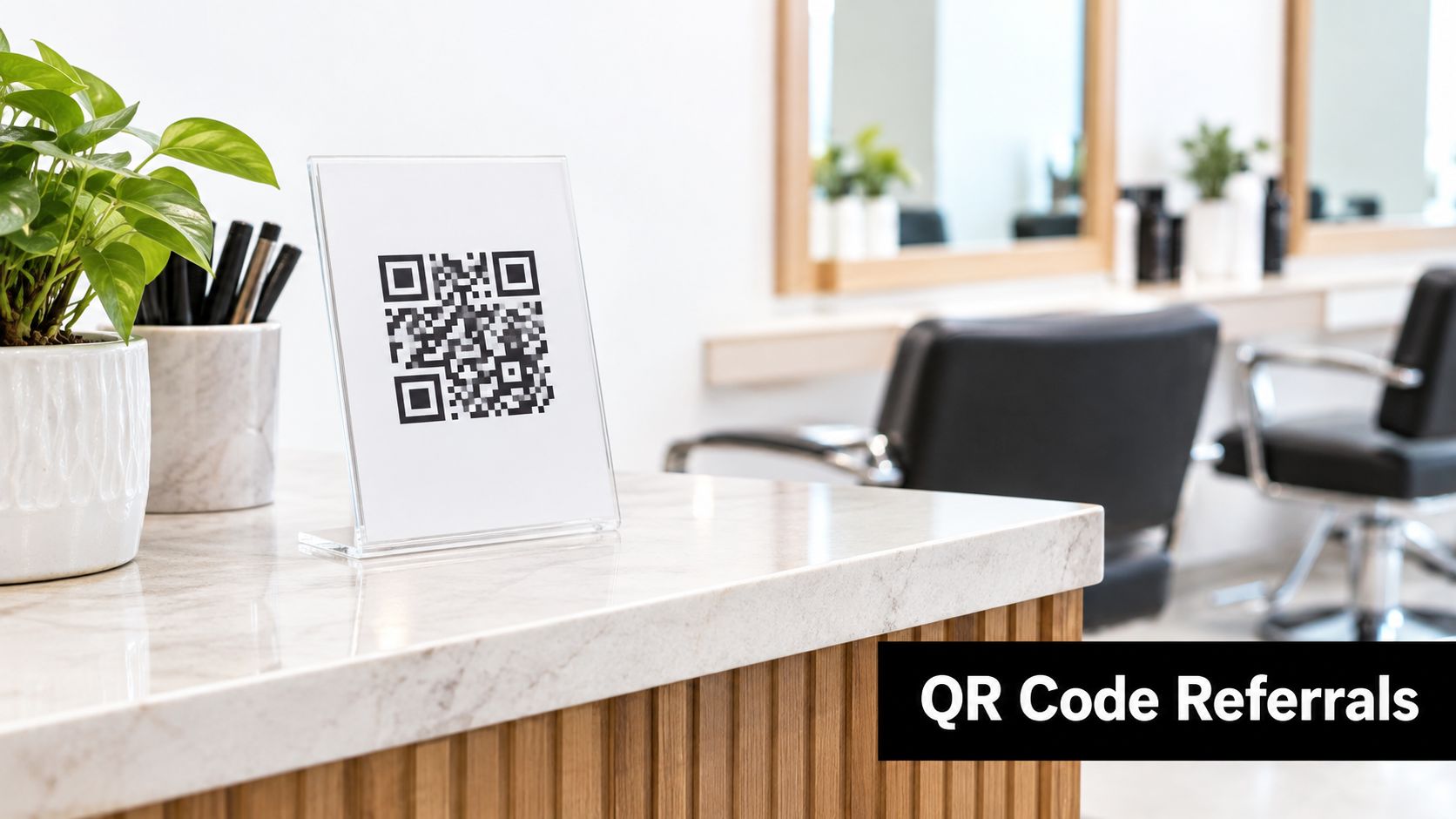
A hair salon doesn't need a grand campaign to make referrals part of daily work. At checkout, the receptionist places a small QR sign beside the Square POS. The client scans it, opens a phone-friendly referral page, and sends the offer to a friend before putting her coat on.
The staff member doesn't copy a code into the payment screen. The friend can book through the salon's normal process, and the owner can later see whether the introduction resulted in a completed visit. That keeps the referral prompt attached to a real customer moment rather than burying it in a newsletter.
A fitness studio can use staff links
A studio with several instructors may give each coach a personal referral link. After a member praises a strength class, the coach can share the link by text or include it in a follow-up message. The new visitor receives the agreed welcome offer, while the studio sees which instructor and location generated the booking.
This setup works better than asking every coach to use one generic code. A shared code can show volume, but it can't tell the manager whether a referral came from a coach, a member, or a front-desk conversation. Individual links also make it easier to recognize staff who consistently create good introductions.
A spa can create a seasonal challenge
A spa manager facing a quiet period might run a short referral challenge for existing clients. The program can offer a temporary bonus, a treatment-related gift card, or a reward tied to a particular service category. The manager promotes it at checkout, in appointment reminders, and through the client portal.
The campaign should still use the same qualifying-payment rules as the everyday program. A seasonal incentive can change the motivation, but it shouldn't change how staff record customers or resolve disputed attribution. That consistency matters when several therapists serve the same client.
For a multi-location business, keep the customer experience consistent while allowing each location to see its own results. Managers can identify whether a referral offer works better for hair services, recovery sessions, facials, or group classes without forcing every branch into identical messaging.
Taking Action and Tracking Early Results
Start with one clear promise. Decide what the new customer receives, what the referrer receives, and which completed Square transaction activates the reward. If staff can't explain the offer quickly, customers won't understand it well enough to share.
Then choose the first referral moments. Put the QR code at checkout, add a prompt after a completed appointment, and give staff a short sentence they can use naturally. A salon might say, “If you know someone looking for a new stylist, you can send them this welcome offer.” A coach might share the link after a member compliments a class.
Watch quality, not just volume
A busy dashboard can hide a weak program. Track the path from invitation to completed booking or payment, then compare the value and retention of referred customers with other acquisition sources.
Focus on:
- Participation: How many existing clients open or share the program?
- Referral conversion: How many referred people become paying customers? Industry summaries place average referral conversion around 2.5% to 3.5%, with referral channels reported at 3x to 5x higher conversion rates than other channels in some comparisons (GrowSurf's referral marketing statistics).
- Customer quality: Peer-reviewed Wharton research found that customers acquired through referral programs show higher margins and lower churn than customers acquired through other channels (Wharton's customer referral research).
- Long-term value: One industry summary reports that referred customers can have 16% higher lifetime value than customers acquired through other means (Birdeye's referral marketing data).
- Operational accuracy: Check whether rewards are attributed correctly across Square POS, Square Appointments, invoices, and phone bookings.
Give the program time to settle
The first period is for finding friction. Ask staff where customers hesitate. Check whether the reward makes sense for the service margin. Review cancellations, duplicate records, and referrals that arrive without a completed payment.
Don't change several things at once. If participation is low, simplify the message or sharing step. If referrals arrive but don't book, examine the new-customer offer and the booking experience. If the program produces volume but poor repeat behavior, review qualification rules and the service being promoted.
Use referral reporting and analytics to connect referral sources with revenue, bookings, conversions, and retention. Once the process runs cleanly at one location or service desk, extend it to other staff groups, branches, or seasonal campaigns.
ViralRef connects referral links, QR sharing, rewards, attribution, affiliate roles, and fraud review to the Square tools your team already uses. Visit ViralRef to connect your Square business and turn happy clients into trackable introductions without adding manual reconciliation to the front desk.
Related articles
Point Based Loyalty Programs: A Square Merchant's Guide
Learn to build point based loyalty programs for your salon or spa on Square. A complete guide to earn rates, rewards, and using ViralRef for referral points.
Referral Program Meaning: A Guide for Square Merchants
Unpacking the referral program meaning for salon, spa, and studio owners. Learn how to turn word-of-mouth into new clients with automated rewards on Square.
Small Business Referral Programs: The Square Merchant Guide
Launch successful small business referral programs on Square. A step-by-step guide for salons & spas on rewards, setup, promotion, and automated tracking.