8 Examples of Brand Promises for Service Businesses
Explore 8 examples of brand promises for salons, spas, and studios, with practical templates and tactics to grow through word-of-mouth.

The strongest service-business brand promises clearly state the customer benefit and prove it through a specific referral experience. The best examples of brand promises turn a first booking into a personal thank-you, an easy share, and a trackable reason to return.
That matters because trust is already a purchase filter. In Edelman's survey, 81% of respondents said trusting a brand to do what's right was a deal breaker or deciding factor when buying, while only 34% trusted most of the brands they used, as reported in Edelman's brand trust findings. A salon can say it values referrals, but clients believe that promise when the business recognizes the referrer, rewards the visit, and makes sharing simple.
The eight patterns below are adaptable promises, not slogans to copy. Each connects a customer moment to operational proof, practical wording, and a referral workflow that Square merchants can measure through Square POS, Square Appointments, or Square Loyalty. ViralRef is the only referral program built natively for Square, helping salons, barbershops, spas, and fitness studios turn everyday word-of-mouth into trackable growth. A clear promise also gives you stronger positioning with a value proposition, because it tells customers what they'll receive and how you'll deliver it.
Table of Contents
- 1. Instant Recognition and Personal Thank You
- 2. Flexible In-House Rewards Without External Gift Cards
- 3. Transparent, Real-Time Attribution and Analytics
- 4. No-Friction Sharing Through QR Codes, Text, Social, and a Branded Portal
- 5. Tiered Rewards for Loyalty and Volume
- 6. Built-In Fraud Detection Without Damaging Trust
- 7. Multi-Channel Reward Delivery With Gift Cards, Coupons, and Store Credit
- 8. Accountability and ROI Measurement
- 8-Point Brand Promise Comparison
- Turn a Promise Into a Repeatable Referral Moment
1. Instant Recognition and Personal Thank You
A referred client finishes their first haircut. Before they leave, the person who recommended the shop receives a message and a reward. That small timing decision changes the referral from a vague favor into a recognized contribution.
A useful promise might be: “When your friend becomes a client, we'll thank you right away.” The customer benefit is appreciation, not merely a discount. The proof is immediate confirmation through a gift card top-up, service credit, or personal note.
A boutique fitness studio could give a referrer a $15 credit when a friend books a first class through Square Appointments. A luxury spa could notify the referrer at checkout through Square POS that a $25 gift card is ready. In a barbershop network, staff referrals can appear in real time through a tiered commission system across locations.
ViralRef connects the referral event to Square, then automates the notification or reward. Test the complete path yourself before launch. A reward should trigger within 15 minutes of a qualifying conversion, but speed shouldn't replace quality checks.

Make automation feel human
Automation handles timing, but it can't replace judgment. Send a personal message to your strongest advocates, especially when they refer someone who becomes a regular. Keep referral activity visible in the branded portal so clients can see who has booked, what they've earned, and why the reward appeared.
Practical rule: Thank the referrer at the moment the new client completes the first meaningful action, not weeks later.
Use this practical guide to thanking clients for their business to shape the wording, then connect the final message to your ViralRef workflow. Also use fraud detection before adding credit. A fast reward that goes to fake accounts teaches clients that the program isn't carefully managed.
2. Flexible In-House Rewards Without External Gift Cards
A salon can spend referral budget on a third-party gift card, or it can keep that value inside the business. The second option usually creates a better connection between acquisition and retention, provided the reward fits the service margin.
Try this promise: “Bring someone you trust, and we'll give you credit toward your next service here.” It tells the referrer exactly where the value can be used. It also gives the business control over gift cards, service credits, coupons, and expiration rules.
A salon owner might offer $25 in salon credit for a successful referral. If the customer later buys $60 in services, the reward encourages a return visit while leaving $35 in sales before other costs. A fitness studio could offer one free class, which gives the referrer another reason to attend while the referred friend becomes a paying member. A spa group could use tiers, starting with 10% off a later visit and allowing high-volume advocates to earn premium treatments.
ViralRef's native Square integration lets you issue rewards that fit your operation instead of forcing an outside marketplace into the customer experience.
Protect margin and remove ambiguity
Set the reward against the broader customer relationship, not only the price of one appointment. A reward can be generous without being careless if it encourages repeat visits and stays aligned with your average customer lifetime value.
- State the reward plainly: “You'll earn $25 in credit to use on any service here” is clearer than “Earn exclusive benefits.”
- Use slow periods strategically: ViralRef's Bounties & Challenges feature can increase reward value when bookings soften.
- Coordinate loyalty programs: Square Loyalty points can complement referral credit, but explain how the two benefits work together.
- Set an expiration: A 90-day window can encourage a timely return, as long as customers see the date before accepting the reward.
- Review redemption behavior: Track which services referrers choose when they use credit, then adjust future offers.
The trade-off is flexibility versus complexity. Give customers too many reward choices and staff will spend appointment time explaining them. Start with one clear in-house reward, then test another only after the first version runs smoothly.
3. Transparent, Real-Time Attribution and Analytics
A barbershop owner shouldn't have to guess whether a referral produced a first visit, a repeat customer, or no sale at all. The promise here is straightforward: “You'll always see the customers, revenue, and rewards your referrals create.”
That transparency serves two audiences. Clients want proof that their recommendation counted. Owners and staff need enough detail to improve the program instead of rewarding activity that doesn't lead to valuable customers.
A barbershop chain could show a barber that their referrals generated new appointments and revenue during the month. A salon might compare referrals from influencers with referrals from regular clients and discover that one group returns more often. A fitness manager could compare locations and coach the studio whose team isn't explaining the program consistently.
ViralRef's dashboard tracks referral quality, conversion, retention, and revenue attribution. Referrers can use their branded portal to see clicks, conversions, and rewards, while managers can use role-based access to separate staff and location views.
Show quality, not just volume
High referral volume can hide weak retention. Review conversion regularly, then compare whether referred clients continue booking. Share a simple monthly view with staff, including total referrals, rewards issued, revenue, and retention observations.
“Sarah brought in five new members this month, and they're still attending. Those referrals are gold.”
That kind of recognition uses data without turning the team meeting into a spreadsheet exercise. For a deeper operating model, use referral reporting and analytics to decide which advocates, channels, and locations deserve more attention.
4. No-Friction Sharing Through QR Codes, Text, Social, and a Branded Portal
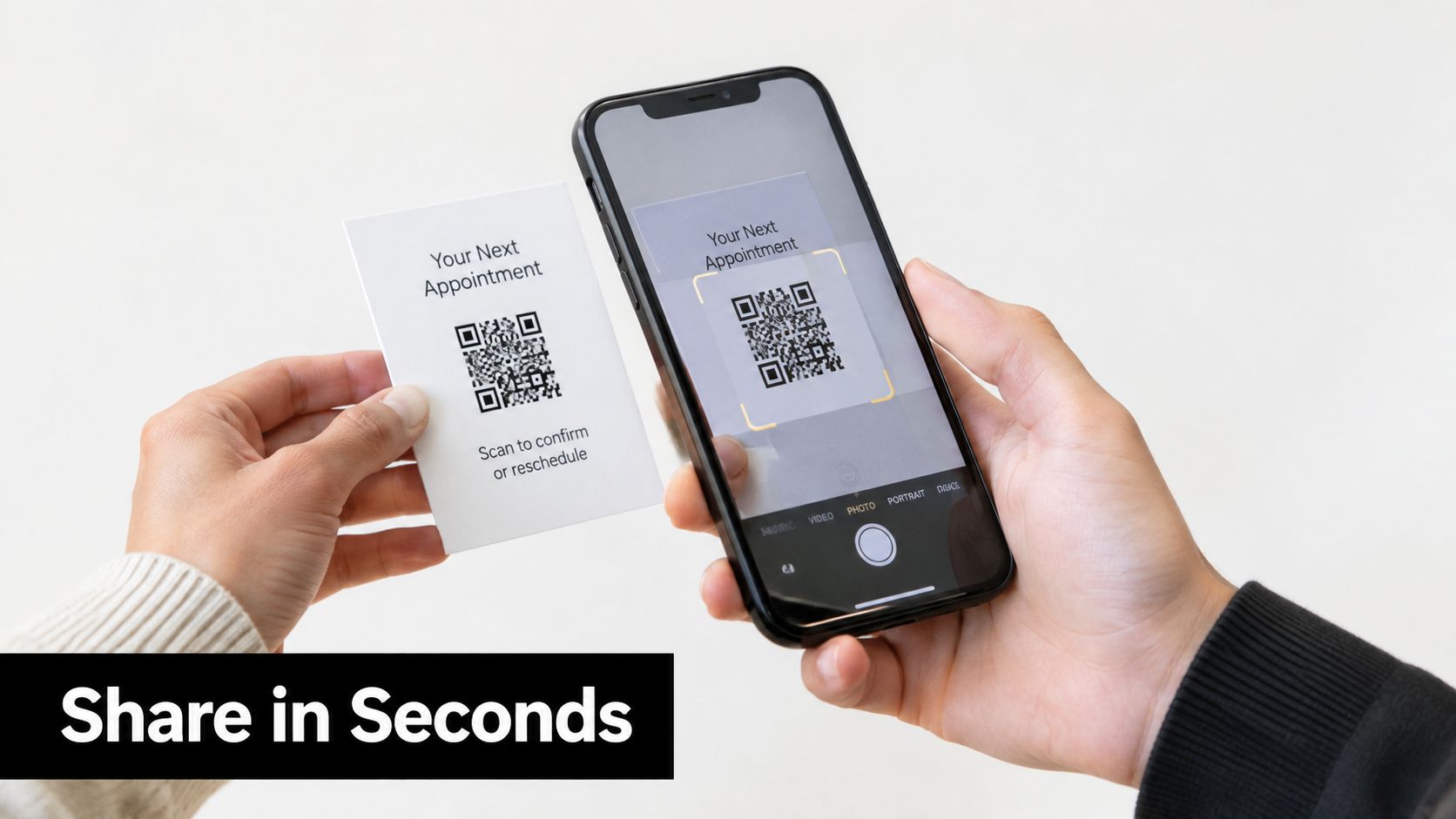
Referral sharing should fit the customer's existing routine. The promise becomes: “Share your referral in seconds, from the phone you already use.” That wording sets a clear standard. A client should not need to download an app, remember a password, or decode a complicated offer.
A boutique fitness studio can put a QR code in the lobby, where a member scans it and sends the referral link to a group chat. A spa can print the code on appointment cards for clients to use after booking. At a barbershop, each team member can wear a code on a name tag, giving the stylist a natural prompt during checkout.
ViralRef provides each customer with a referral link and a branded portal that works through a phone number, without requiring an app. Customers can share by QR code, text, email, or social media. The business can match the landing page to its website colors and tone, keeping the referral experience connected to the brand.
Test the path before promoting it
Use the portal on both major mobile systems and an older device, not only the owner's newest phone. Check whether a client can understand the offer, identify the friend's benefit, and share without staff assistance.
Place codes at moments tied to the next visit, such as appointment cards, mirrors, reception desks, staff badges, and printed flyers. Lead with the friend's benefit, for example, “Give your friend a first-visit offer,” rather than asking customers to help the business grow.
Compare SMS, QR scans, and social sharing by the bookings they produce. ViralRef's Bounties & Challenges can prompt sharing during slower booking periods, while the branded portal should keep its wording and visual style consistent with the business website.
The trade-off is visibility versus clutter. A QR code placed everywhere quickly becomes background noise. Give it one clear job and put it where customers are already considering their next appointment. QR code marketing ideas can help identify suitable customer moments.
5. Tiered Rewards for Loyalty and Volume
A referral program should recognize frequency without turning every recommendation into a sales contest. A client who sends one friend has different value and expectations from an advocate who regularly fills your booking calendar.
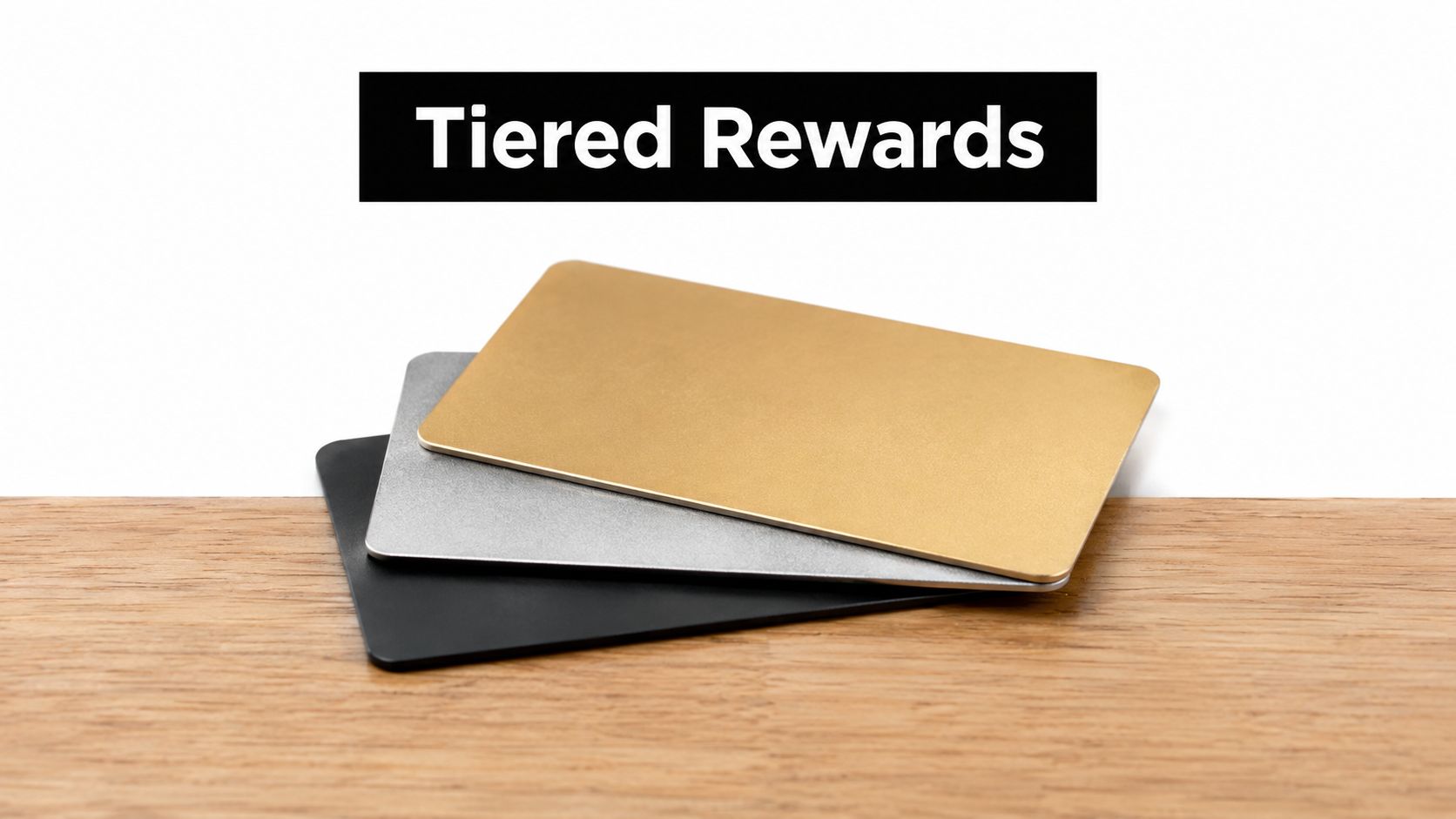
Use a promise customers can understand quickly: “The more people you introduce, the more valuable your rewards become.” For example, a salon might offer $15 credit for the first 1 to 3 referrals, $20 for the next 4 to 8, and $25 plus a quarterly free haircut after 9 referrals. Treat those thresholds as a starting structure. Adjust them to your margins, appointment availability, and the value of a new client.
A fitness franchise could pay staff a $5 commission for an initial referral and $8 after a higher milestone. A spa group with 5 locations might run a cross-location leaderboard and recognize its leading advocate with a $500 annual bonus and a newsletter feature. Recognition can increase participation, while unclear rules or aggressive rankings can create pressure between staff and customers.
Make progress visible, then test the economics
Keep the program to no more than 3 tiers. The first referral should qualify for a reward, and the portal should show the next attainable milestone: “You've earned six referrals. One more opens the next level.”
Start with reachable thresholds so clients learn the system through an early win. Use temporary boosts carefully, such as double commissions during a slow month, without changing the permanent structure. Staff may also value recognition, career opportunities, or early access to services, especially when cash rewards strain margins.
Review the program after each cycle. If nobody reaches the highest level, lower the threshold or replace it with a benefit customers can use. Reserve a VIP level for exclusive events or first access when another discount would add little value.
ViralRef supports flat rewards, per-referral bonuses, performance-based escalation, roles, and groups. The measurable promise is a visible path from one recommendation to stronger recognition, with each tier tied to referrals and the business's capacity to serve them.
6. Built-In Fraud Detection Without Damaging Trust
Fraud controls earn trust when customers can understand them and challenge a mistake. Use a promise such as: “We protect referral rewards so honest recommendations get paid fairly.”
The customer moment is simple. A client refers a friend, the friend books, and the reward appears without an unexplained denial. Behind that experience, ViralRef screens for self-referrals, duplicate accounts, rapid conversions, and disposable email addresses. Suspicious activity should create a review task, not an automatic accusation.
Consider the operational edge cases. A barbershop might see one employee create several accounts with different email addresses. A fitness studio might flag two partners who share an email account and payment method, even though the referrals are legitimate. A salon location might report an unusual rise in self-referrals that deserves a conversation before any reward is withheld.
Make the promise measurable
Track flagged referrals, approved reviews, rejected cases, and appeals. Review the patterns weekly at launch, then adjust the schedule as volume changes. If staff repeatedly misunderstand eligibility, improve the explanation before tightening controls.
A workable review process should include:
- A clear reason: Tell staff and customers which rule triggered the review.
- An appeal path: Let a legitimate referrer explain a shared household, phone, or payment detail.
- Human approval: Treat suspicion as a signal, not proof.
- Separate rules: Staff, clients, and influencers may require different screening patterns.
- Private reporting: Share prevented abuse internally without exposing customer details.
A short fraud detection system guide can help managers define those steps before launch. The trade-off is direct. Strong screening protects margins, while automatic rejection can punish genuine referrals and weaken confidence in the program. ViralRef makes the workflow measurable, but the business still needs a fair decision rule and a person responsible for applying it.
7. Multi-Channel Reward Delivery With Gift Cards, Coupons, and Store Credit
Customers don't all value the same reward format. One salon client wants credit toward a color service. A fitness member wants a free class. A spa customer may prefer a digital gift card they can give to someone else.
Build the promise around choice: “We'll deliver a reward you can use easily at your next visit.” ViralRef supports digital gift cards, auto-applying coupons, and store credit connected to Square POS, Square Virtual Terminal, and Square Invoices.
A luxury spa could issue a $50 digital gift card that a client uses against a $150 massage at Square POS. A fitness studio could add a free class to the customer's account so it appears when they book through Square Appointments. A salon with 5 locations could let a referrer use $25 in store credit wherever the business operates, with the stylist checking and applying the balance at checkout.
Match the reward to the visit
- Offer a simple choice: Let clients select in-studio credit or a smaller immediate discount if both options are profitable.
- Automate service rewards: Add a free class or treatment to the account instead of making the customer remember a code.
- Set a clear expiry: A 60-day gift-card window can encourage a return visit, but display it prominently.
- Test formats: Compare gift cards, percentage discounts, and service credits by redemption and referral quality.
- Train the front desk: Staff should mention available credit before the client pays.
Reward flexibility creates a trade-off between convenience and training. A business can support several formats, but every staff member must know how each one appears in Square. Otherwise, the promise breaks at checkout.
Explain the reward in the branded portal, for example, “You'll earn a $25 gift card to use on any service here.” Then use referral reward ideas for service businesses to refine the offer without adding unnecessary choices.
8. Accountability and ROI Measurement
A referral promise earns trust when a salon owner can answer one question: did this referral create a profitable customer who returns? ViralRef turns that question into an operating review tied to Square activity.
Start with the customer moment. A client refers a friend at checkout, the friend books through Square Appointments, and the business records the referral, sale, reward, and later visit. The owner can then compare that customer with walk-ins. A multi-location spa can review referral revenue by site and investigate whether one team consistently invites referrals through QR codes or staff conversations.
The trade-off is detail versus maintenance. More fields can improve attribution, but inaccurate Square data or inconsistent staff tagging weakens the result. ViralRef connects referral activity with revenue attribution, conversion rates, referral quality, and retention, helping the team estimate acquisition cost by channel.
Make the numbers operational
Use a short review rather than a dashboard nobody opens. Compare total marketing spend with new customers acquired, then review referral rewards and administration costs separately.
- Review monthly: Share referrals, conversions, revenue, rewards, and profit with the team.
- Separate sources: Compare staff, past clients, influencers, and other advocate groups.
- Track retention: Review referred customers and walk-ins at consistent later booking points.
- Test one change: Adjust the reward or message before changing the whole program.
- Investigate locations: Document habits from stronger sites and test them elsewhere.
A sample calculation could include 240 referrals, 156 conversions, $18,000 in revenue, and $3,000 in rewards, producing a 6:1 revenue-to-reward ratio. These figures illustrate the method, not an expected outcome. Square sales records and ViralRef attribution should supply the actual inputs.
For a related measurement framework, see calculating influencer marketing ROI. The adaptable promise is simple: “You can see what each referral produced, what it cost, and whether the customer returned.” That wording gives owners a measurable standard and gives staff a reason to record every referral accurately.
8-Point Brand Promise Comparison
| Feature | Implementation complexity | Resource requirements | Expected outcomes | Ideal use cases | Key advantages |
|---|---|---|---|---|---|
| Instant Recognition & Personal Thank You | Medium, needs real-time POS/Appointments integration and automation | Square Appointments/POS integration, notification setup, fraud checks | Immediate referrer satisfaction, higher engagement and repeat referrals | Single-location salons/spas, staff commission programs, boutique services | Real-time rewards, strong emotional connection, minimal manual work once automated |
| Flexible, In-House Rewards (No External Gift Cards) | Medium, configure in-house credits/coupons within Square | Gift card/coupon management, Square setup, clear customer communication | Increased return visits, better margin control vs. cash payouts | Salons, spas, studios focused on retention and profitability | Keeps revenue in-house, no third-party fees, flexible reward design |
| Transparent, Real-Time Attribution & Analytics | High, reliable data sync and dashboarding required | Accurate Square data, analytics/reporting setup, ongoing maintenance | Clear attribution, identify top referrers, improve program ROI | Multi-location businesses, managers needing accountability and performance insights | Data-driven decisions, builds referrer trust, enables targeted rewards |
| No-Friction Sharing (QR, Text, Social, Branded Portal) | Low, portal with share buttons and QR generation | Branded portal, QR/link generation, minimal staff training | Higher referral volume and faster sharing behavior | High-footfall studios, businesses relying on social sharing and walk-ins | Maximizes share rate, broad accessibility, very low user friction |
| Tiered Rewards for Loyalty & Volume | Medium, tier logic, thresholds and visibility required | Tier configuration, leaderboards, monitoring and periodic adjustments | Greater advocacy from top referrers, competitive staff engagement | Franchises, multi-location chains, programs targeting high-volume referrers | Scales rewards with performance, motivates repeat referrals and competition |
| Built-In Fraud Detection Without Damaging Trust | Medium, rule sets plus manual review workflow | Fraud rules, flagging system, manager review time, reporting | Reduced fraudulent payouts while maintaining legitimate referrer trust | Programs with high volume or employee incentives | Balances security with user trust, adjustable sensitivity, protects ROI |
| Multi-Channel Reward Delivery (Gift Cards, Coupons, Store Credit) | Medium, support multiple reward formats and POS redemption | Gift card/coupon setup, account balance tracking, staff training | Higher redemption rates, accommodates user preferences, seamless checkout | Businesses with diverse client tech comfort levels and multi-touch checkout | Flexible reward formats, auto-apply options, works across Square touchpoints |
| Accountability & ROI Measurement (Proving Referral Program Works) | High, robust attribution, LTV and CAC calculations needed | Accurate data, analytics expertise, regular reporting cadence | Measurable ROI, informed budget shifts, validated program value | Owners, investors, and managers needing financial proof of marketing impact | Demonstrates financial impact, optimizes spend, supports scaling decisions |
Turn a Promise Into a Repeatable Referral Moment
Choose the promise that fixes your current bottleneck. If follow-up is weak, start with instant recognition and a personal thank-you. If clients return infrequently, use in-house rewards that keep value inside the salon, spa, barbershop, or studio. If customers rarely participate, remove friction with QR codes, text sharing, and a branded portal.
Active advocates may respond to simple tiers. A program with suspicious activity needs fraud review before it needs larger rewards. If customers forget to redeem benefits, flexible delivery through gift cards, coupons, or Square account credit can remove the blockage. If you aren't sure whether referrals are worth the effort, start with analytics and measure acquisition cost, revenue, conversion, and retention.
Trust depends on delivery, not wording. Edelman's 2026 Brand Trust special report found that 88% of consumers considered trusting a brand an important or critical purchase criterion, tied with value and just behind quality, as reported in the report on brand trust and purchase decisions. For service businesses, that means a promise such as “we value your referrals” needs proof in the booking record, the reward balance, the staff conversation, and the next visit.
Use a short implementation sequence:
- Write the customer-facing promise: State the benefit and the condition in plain English.
- Connect the proof: Link the qualifying purchase or booking to Square POS or Square Appointments.
- Launch through ViralRef: Give customers a phone-accessible portal, referral link, and sharing options.
- Explain it at checkout: Tell the client what their friend receives and what they earn.
- Review quality regularly: Check referral sources, reward costs, repeat bookings, and retention.
A strong promise also needs to fit the broader brand experience. This branding guide for growing companies is useful for keeping referral wording consistent with your customer-facing identity. Keep the language warm, but keep the proof specific.
ViralRef is the only referral program built natively for Square, so merchants using Square POS or Square Appointments can connect word-of-mouth growth to the tools already used to take payments and manage appointments. The result isn't a slogan on a poster. It's a repeatable customer moment that thanks the right person, rewards the right action, and gives the owner a clear view of what referral growth is producing.
ViralRef gives Square merchants branded referral portals, automatic attribution, flexible in-house rewards, QR and social sharing, fraud review, and analytics for conversion, revenue, and retention. Visit ViralRef to connect your Square business and turn your next satisfied salon, spa, barbershop, or studio client into a measurable source of new bookings.
Related articles
8 Scaling Strategies for Square Service Businesses
Explore 8 practical scaling strategies for Square salons, barbershops, spas, and studios using referrals to grow bookings and retention.
8 Examples of Brand Loyalty & How to Build It
Discover 8 real-world examples of brand loyalty from Apple, Nike & more. Learn strategies to build a loyal client base for your Square business.
Customer Portal Design for Service Businesses
Practical customer portal design guide for Square service merchants. Covers user journeys, mobile UX, rewards, security, and real salon and spa examples.