Easy Rewards Referral Code: The Square Merchant's Guide
Create an easy rewards referral code for your Square business. Step-by-step guide to setup, messaging, rewards, and redemption at Square POS.
A client finishes a haircut, checks the mirror, and says, “My sister would love this.” You smile, hand over a business card, and hope the recommendation survives the trip home. By the time the client gets busy with work, errands, or dinner, the referral code is still sitting in a wallet, if it was written down at all.
That gap is where many Square salons, barbershops, spas, and fitness studios lose easy growth. Word of mouth is already happening, but the business can't identify who made the introduction, whether the new guest booked, or which reward should be applied at checkout. An easy rewards referral code only works when sharing, attribution, and redemption fit the appointment workflow your team already follows.
Table of Contents
- The Hidden Friction in Your Current Referral Strategy
- Connecting ViralRef to Your Square Account
- Choosing Between Gift Cards and Auto-Apply Coupons
- Crafting the Perfect Referral Pitch for Your Team
- Redeeming Rewards at the Square Point of Sale
- Tracking Results and Scaling Your Growth Engine
The Hidden Friction in Your Current Referral Strategy
At the end of a successful color appointment, the client is already doing your marketing for you. She likes the result, asks what products you used, and mentions a friend who needs the same service. The awkward part begins when you try to turn that enthusiasm into action.
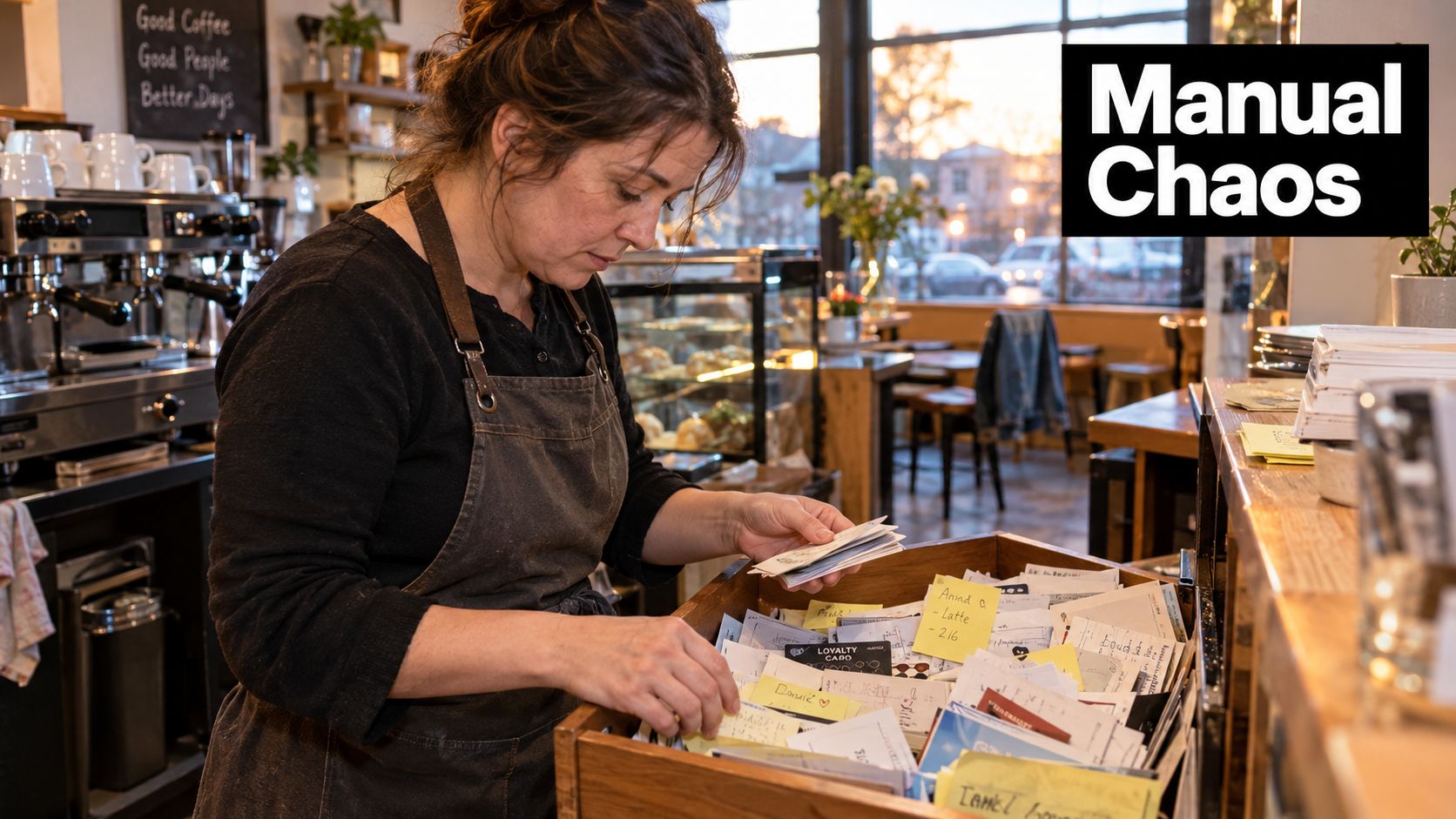
A paper card creates work for both people. Your receptionist has to write a promotion, the client has to remember to carry it, and the friend has to explain who referred them when they finally arrive. If the card is misplaced, the introduction disappears. If the friend books online and pays later, nobody may connect the visit to the original client.
The same problem appears in a barbershop. A regular tells three coworkers about the barber who finally understands their beard shape, but the shop has no reliable way to record those introductions. A spa may hear “my partner sent me” at the front desk, yet still issue the same welcome offer to everyone. A fitness studio may know that members are inviting friends, but not whether those friends attend a trial class or become paying clients.
Practical rule: If the customer has to remember a code, carry a card, or explain the referral at the register, the process is carrying too much friction.
Referral marketing benefits from trust that broad advertising doesn't automatically have. Industry summaries report that 92% of consumers trust referrals from people they know, and people are 4 times more likely to buy when referred by a friend. Referral programs can also produce 3 to 5 times higher conversion rates than other marketing channels, according to the referral marketing statistics roundup from GrowSurf. The point for a service business isn't to chase a headline number. It's to protect the warm moment when a happy client is most willing to share.
A digital referral link gives the client something they can send immediately by text or social message. For owners comparing marketing channels, a practical content distribution affiliate program can help extend reach, but it doesn't solve the in-store attribution problem by itself. Your referral system still needs to recognize the person who shared, connect the new customer to that share, and apply the reward inside the payment flow.
Connecting ViralRef to Your Square Account
Square already holds the pieces a service business needs to run a referral program. Square POS processes the payment, Square Appointments manages bookings, and the customer directory gives you a record of the people who visit. The missing piece is a referral layer that can connect the recommendation to the payment without making your front desk operate another manual system.
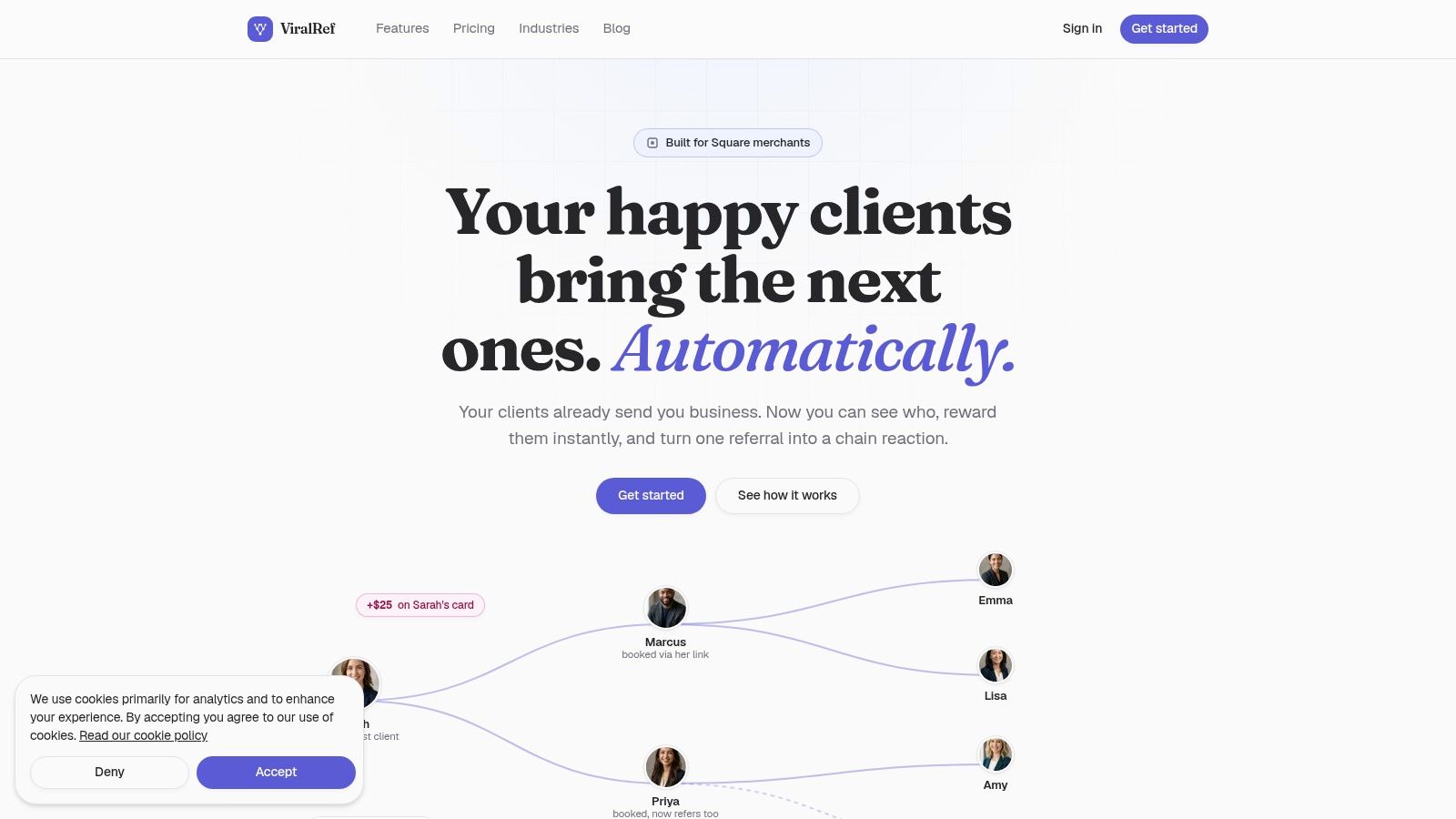
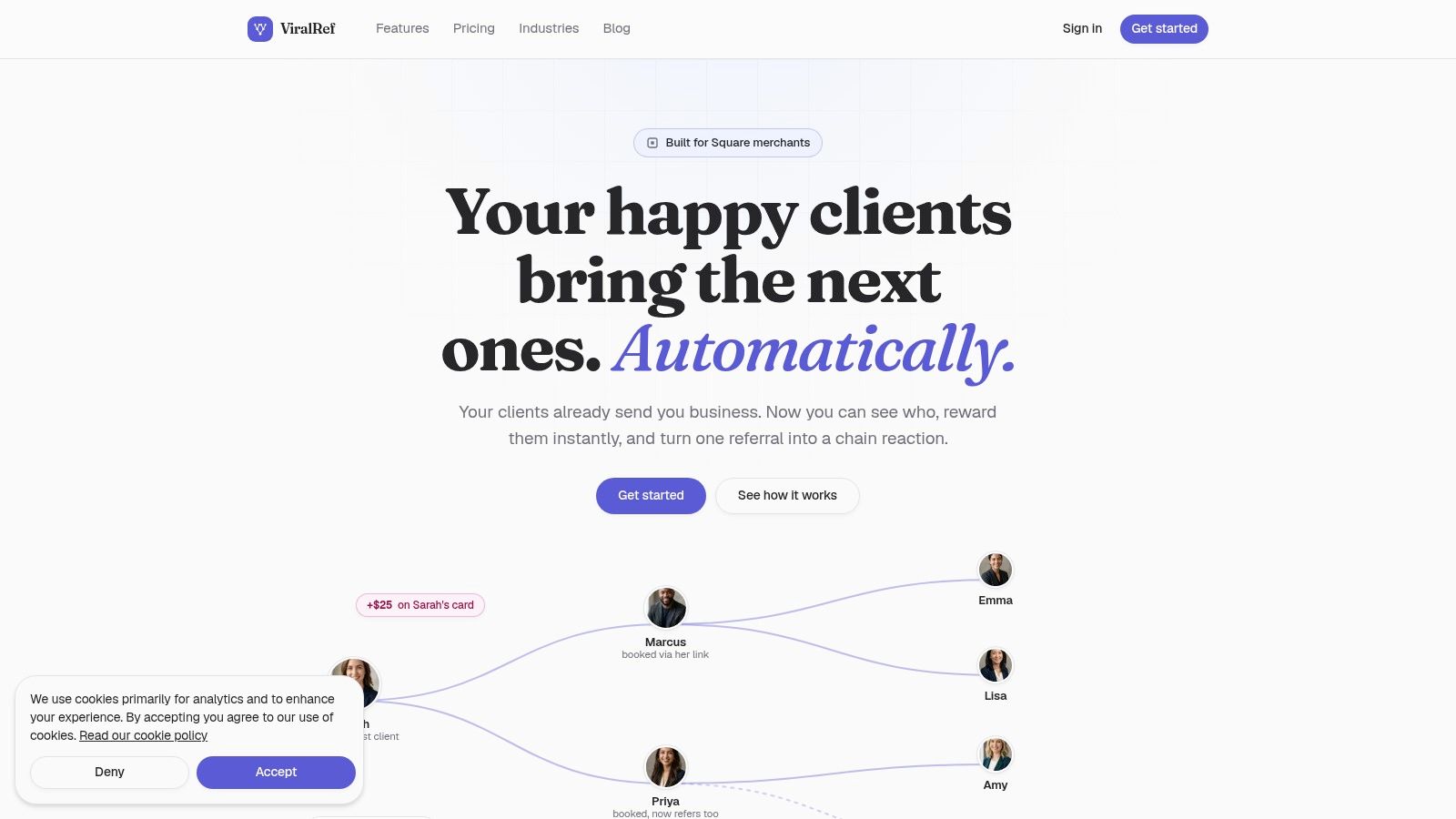
ViralRef is the only referral program built natively for Square. It connects to the account you already use, then gives customers a unique referral link and a branded portal they can open with their phone number. They don't need to download an app, create a separate login, or wait for a printed card.
Set up the connection
Start from the Square connection flow and authorize the account you use for payments and customer records. The important reason for this step is attribution. The system needs to recognize the customer who shared the referral and the new customer who eventually books and pays.
Next, create the offer for your business. A salon might reward the existing client with an in-house gift card while giving the new guest an automatic first-visit coupon. A barbershop might use one simple reward for a referred haircut. A fitness studio could create a reward that only becomes valid after the referred visitor completes the qualifying payment.
Keep the first program narrow. Choose one audience, one referral action, and one reward rule. Your staff should be able to explain it between appointments without opening a training manual.
Give every customer a simple sharing path
After the connection, customers can access their branded portal through their phone number. The portal shows their personal referral link and QR code, so they can share it from their phone while leaving the salon or invite a friend face to face.
The setup should take minutes, not hours, and it shouldn't require technical expertise. Your team continues using Square Appointments for bookings and Square POS for payments. The referral system works in the background, while the customer sees a straightforward sharing experience. For the account connection details, follow the Square connection documentation.
The key distinction is that attribution and reward redemption belong in the payment workflow, not in a third-party checkout that your receptionist has to reconcile later. That keeps the referral record tied to an actual transaction rather than to an unverified claim that somebody mentioned your business.
Choosing Between Gift Cards and Auto-Apply Coupons
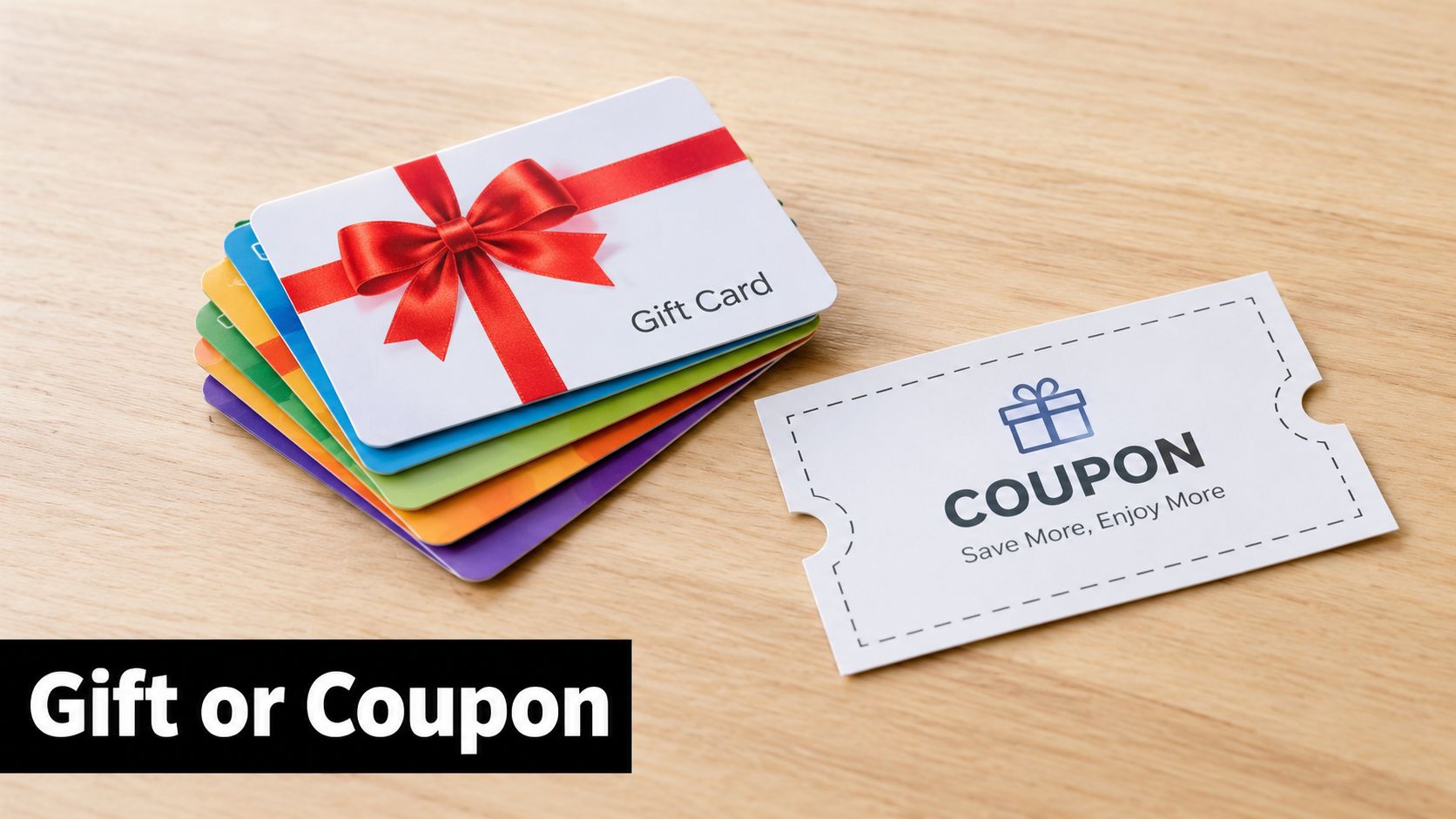
The reward you choose should match the job you need it to do. Gift cards are usually stronger for the existing customer who made the recommendation, while auto-apply coupons are usually better for the new customer standing at the register.
An existing client already knows your service. A gift card encourages that person to return, book another treatment, and keep the reward inside your business. It also feels tangible. The customer can see a balance connected to your salon, spa, barbershop, or studio instead of receiving a vague promise that someone will “sort out” a credit later.
An auto-apply coupon solves a different problem. New customers don't want to search an email, type a code, or negotiate a discount with your receptionist. If the referral has been tracked correctly, the offer can apply at Square POS without manual code entry.
Match the reward to the customer
| Business goal | Better starting option | Why it fits |
|---|---|---|
| Bring an existing client back | In-house gift card | The value remains connected to a future visit |
| Reduce hesitation for a first visit | Auto-apply coupon | The new guest doesn't need to enter a code |
| Reward both sides clearly | Gift card for the referrer, coupon for the new guest | Each person receives a benefit suited to their stage |
| Protect service margins | A reward tied to a qualifying payment | You avoid paying for an uncompleted introduction |
A spa owner might issue a gift card after the referred guest completes a paid facial. The new guest receives an automatic offer on that first qualifying visit. A barber can use the same structure for a new client referred by a regular, while a fitness studio can connect the reward to a paid membership or qualifying class package rather than a free consultation.
Square already supports physical and eGift cards for service businesses, and Square Loyalty lets merchants define reward tiers by setting the points needed and the value or scope of the discount, as described on Square Appointments pricing. Those tools are useful, but they aren't the same as referral attribution. Loyalty rewards recognize repeat behavior, while a referral program must identify who brought in the new customer and whether that customer completed the required action.
Don't reward the wrong event
A signup isn't the same as revenue. If you issue a gift card when someone only opens a referral page, you may pay for activity that never becomes an appointment. Set the qualifying event around a real payment, and state the conditions in language customers can understand.
Program rules also need an eligibility window. Some referral programs require the code immediately or impose a strict deadline. For example, Pokémon GO's referral bonus guidance says the code must be redeemed within 72 hours of account creation or login. Your own rules may differ, but the lesson is practical: tell customers when the referral must be used, what the friend must complete, and when the reward becomes available.
For a side-by-side decision guide, see gift cards versus coupons for referral rewards. The best structure is the one your front desk can explain in a sentence and your Square checkout can apply without improvisation.
Crafting the Perfect Referral Pitch for Your Team
Technology won't create referrals if staff members never mention it. The request needs to sound like a natural extension of a good appointment, not a sales pitch delivered while the client is trying to pay and leave.
Train the team to look for a visible satisfaction signal. It might be a client smiling at the finished blowout, a barbershop customer touching a clean neckline, or a fitness member talking about finally completing a difficult class. That moment is more useful than a generic reminder sent days later.
A stylist can say:
“You mentioned your sister would love this cut. I can pull up your referral link now. If she books and completes her visit, you'll receive your salon reward, and she'll get the new-client offer.”
A barber can keep it shorter:
“If you know someone who needs a cut, scan this QR code. Your friend gets the welcome offer, and the referral is connected to your account automatically.”
A fitness instructor might say:
“You've been telling your coworkers about the morning class. Open your member portal before you go, and you can send them your personal invite without making them search for us.”
Make the digital action immediate
Don't tell a client to “look for it later.” Have them open the ViralRef portal on their phone while they're still at the front desk. Show them where their unique link and QR code appear, then let them choose whether to send the link by text or let a friend scan the code.
The staff member doesn't need to explain tracking technology. They only need to cover three points:
- Who benefits: Tell the client what they receive and what the new customer receives.
- What counts: Explain that the friend must book and complete the qualifying payment.
- Where to share: Show the portal, link, or QR code before the client leaves.
A team member who feels awkward asking for a referral can begin with the client's own words. “You said your coworker is looking for a barber” feels personal and relevant. “Please refer your friends” feels like a generic promotion.
Keep the script consistent across locations, but let each service provider use their own voice. A spa therapist may be warm and detailed. A busy barber may use one direct sentence. A studio coach may invite the member to share after class. The team referral network guidance can help owners give clients and staff a common process without forcing every conversation to sound identical.
Redeeming Rewards at the Square Point of Sale
The referral loop is only complete when the reward works at checkout. A customer shouldn't have to present a paper coupon, remember a code, or ask a receptionist to calculate a credit while the next appointment is waiting.
The clean flow starts before the referred guest arrives. The guest receives or opens the referral link, books through the normal service journey, and presents the referral identity through the link or QR code. When the guest pays through Square POS, the system checks the referral record and applies the eligible offer.
What the front desk does
The cashier or receptionist should follow the same basic routine as any other Square payment:
- Open the customer's transaction in Square POS.
- Let the customer scan the referral QR code or identify themselves through the referral flow.
- Confirm that the offer applies to the qualifying service or payment.
- Complete the transaction and let the system record the referral outcome.
The staff member shouldn't issue a manual gift card from a separate dashboard or search through a folder of coupon codes. If the reward is an auto-apply coupon, the discount appears as part of the connected checkout process. If the reward is an in-house gift card, the eligible balance can be issued or topped up according to the program rule.
This matters during real appointment changes. A client may add a conditioning treatment, switch from a standard service to a package, or pay through another Square-supported route. The owner needs a referral record connected to the transaction, not a handwritten note that becomes difficult to reconcile later.
The same principle applies when you use Square Virtual Terminal or Invoices. The reward should follow the payment context rather than forcing the business to maintain a second redemption process. Review the Square POS integration workflow before launch, then test the full journey with a staff account and a separate test customer.
Protect the program without punishing genuine clients
Referral systems need safeguards. Industry reporting identifies fraud management as a top operational challenge for 32% of marketers, and one source estimates e-commerce referral fraud at 1.9% of total referral activity in its benchmark set. The incentivized referral fraud overview describes common warning signs such as self-referrals, duplicate identities, rapid conversions, and disposable email addresses.
Flag those patterns for review instead of rejecting every unusual transaction automatically. A genuine family member may share an address, while a fraudulent account may repeat the same device, payment pattern, or payout behavior. Your goal is to keep redemption easy for honest customers while making abuse difficult to scale.
Tracking Results and Scaling Your Growth Engine
A referral program deserves the same financial attention as paid advertising. Watch the sequence from share rate to click rate, signup or lead capture, purchase conversion, and attributed revenue, rather than celebrating shares alone. Industry benchmark summaries put e-commerce referred-visit-to-order conversion around 3% to 5%, while stronger programs can generate 10% to 30% of referral revenue share, depending on the program and market, as reported by referral program benchmark data.
For a salon, that means separating “a client shared a link” from “a new guest paid for a service.” For a spa, compare the first visit with later bookings. For a fitness studio, check whether referred members stay active instead of measuring only trial registrations. The reporting and analytics guide provides a useful framework for reviewing referral quality, revenue attribution, conversion rates, and retention.
Paid social may deliver more visible traffic, but referral visitors arrive with a personal recommendation already attached. That trust can make the conversation easier, especially when the referral reward is applied directly inside Square instead of handled manually. Once the basic program is working, add carefully controlled options such as staff tiers, influencer partnerships, or temporary challenges during slower booking periods.
ViralRef connects Square POS and Square Appointments with shareable referral links, QR codes, automatic attribution, and rewards that can apply at checkout without manual code entry. Visit ViralRef to connect your Square account and give every happy client a simple way to bring the next appointment through your door.
Related articles
The Square Merchant's Guide to Referral Marketing
A complete guide for Square merchants on setting up automated referral tracking, gift card rewards, and viral growth using your existing payment infrastructure.
Employee Referral Bonus: A Guide for Square Merchants
Learn how to create an employee referral bonus program for your salon or studio. A step-by-step guide for Square merchants to drive new clients via staff.
Loyalty Programs for Ecommerce: A Square Merchant's Guide
Create loyalty programs for ecommerce that work for your salon or spa. A step-by-step guide for Square merchants on rewards, referrals, and retention.