8 Surprise and Delight Ideas for Square Merchants
Discover 8 surprise and delight tactics for Square merchants, from referral bonuses to appointment upgrades that build retention and word-of-mouth growth.

A good customer experience can create revenue, but the best surprise and delight tactics do more than make someone feel appreciated. They give a happy client a natural reason to return, share your business with a friend, and remember your team when it's time to book again. A customer-delight study of more than 2,500 affluent consumers found that 41% were willing to spend more after a transparent interaction, while digital channels accounted for 48% of delight experiences, compared with 29% in person and 22% by phone. The customer-delight research described delight as a commercial lever, not just a pleasant extra.
For a salon, barbershop, spa, or fitness studio using Square, the process doesn't need to be technical. ViralRef is the only referral program built natively for Square, connecting with Square POS and Square Appointments so you can track who referred a new client, issue rewards, and see which relationships produce repeat visits. Square Loyalty can support regular customer recognition, while ViralRef handles referral links, QR codes, attribution, rewards, and progress tracking.
The eight ideas below follow the customer journey, from a referred client's first visit to long-term ambassador status. You'll see how to pair each moment with a practical Square workflow and a ViralRef tracking method. If your goal is to boost memberships with referrals, start with one gesture that your staff can deliver consistently.
Table of Contents
- 1. Unexpected Gift Card Top-Ups for Loyal Referrers
- 2. VIP Early Access or Exclusive Service Perks
- 3. Surprise Bonus Challenges During Slow Periods
- 4. Surprise Service Upgrades for Referred Customers' First Visit
- 5. Handwritten Thank-You Notes and Personalized Recognition
- 6. Surprise Referral Streaks and Bonus Multipliers
- 7. Limited-Edition or Seasonal Surprise Rewards
- 8. Surprise Tier Promotions and Affiliate Ambassador Programs
- 8-Point Surprise & Delight Comparison
- Make Every Referral Feel Like a Personal Thank-You
1. Unexpected Gift Card Top-Ups for Loyal Referrers
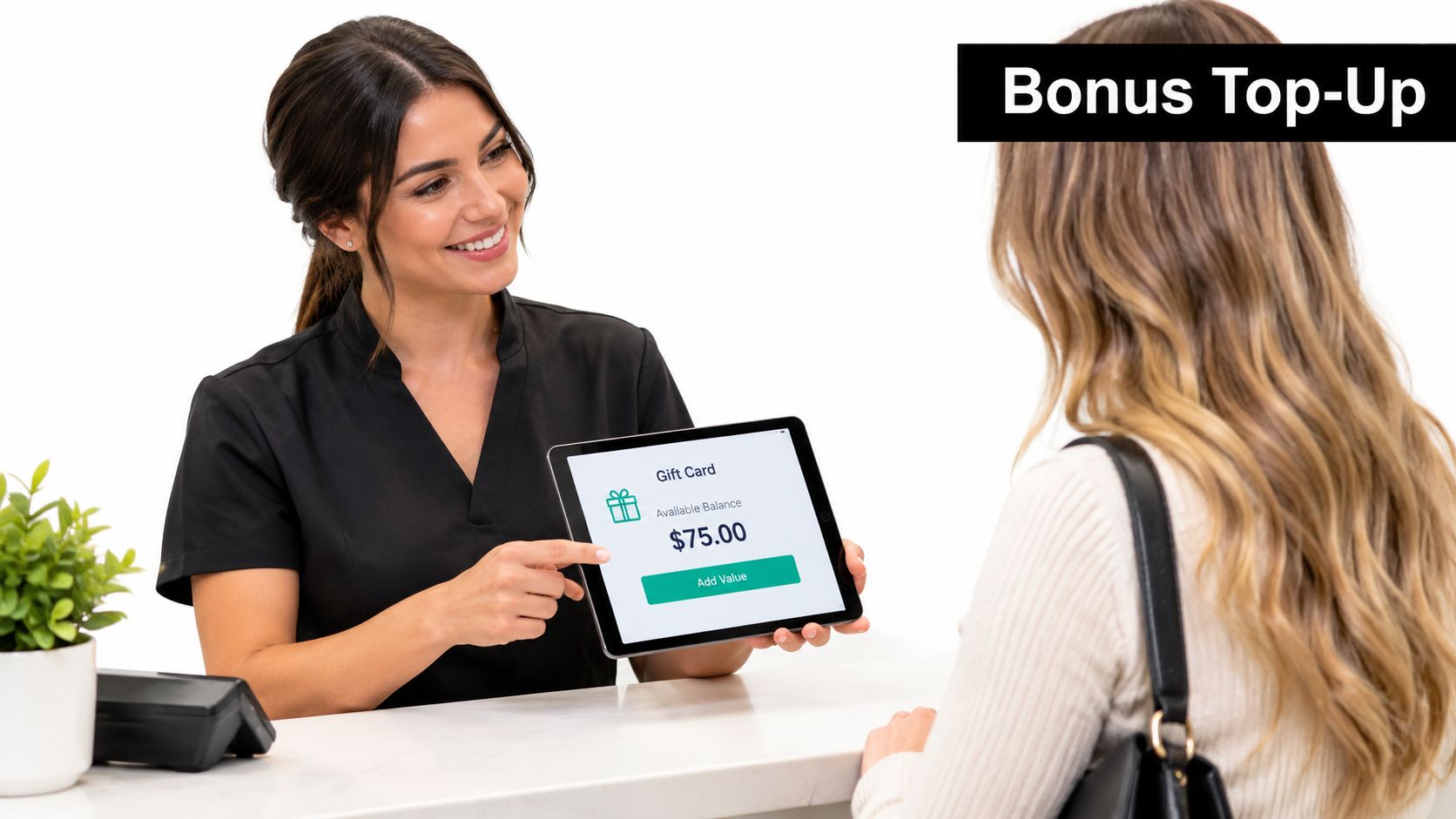
A referral reward feels useful when it turns into credit the customer can spend on their next haircut, massage, class, or product purchase. It feels memorable when the client receives an unexpected bonus after already earning the original reward.
ViralRef can automatically add a referrer's reward to an in-house gift card when the referred customer completes a qualifying action, such as booking a first appointment. The balance is then available through your Square POS workflow, so the client can use it during a future visit without staff searching through paper notes or manually applying a discount.
Make the bonus feel earned
Set a clear milestone, such as an extra gift card credit after a customer reaches a referral threshold. You don't need to make the reward large. A modest, unexpected addition can feel more personal than a permanent discount because it tells the client that someone at the business noticed their support.
Use ViralRef's branded portal to show the customer's current progress and the next milestone. Real-time analytics can help you identify your most active referrers, while the portal gives those customers a simple way to share their link or QR code from their phone.
Practical rule: Reward the behavior you want to repeat, but keep the reward easy for staff and customers to understand.
Gift card credit works particularly well for businesses that depend on return visits. A salon can apply it to a future color appointment, a spa can direct it toward an add-on, and a fitness studio can use it toward a membership renewal. If you want to compare different ways to structure gift card incentives, these gift card reward ideas provide a useful starting point.
Avoid building a complicated points system before you know whether clients will share. Start with one referral action, one gift card reward, and one bonus milestone. Then use ViralRef reporting to compare new bookings, reward expense, repeat visits, and the quality of referred customers.
2. VIP Early Access or Exclusive Service Perks
Money isn't the only thing customers value. In a busy service business, access can be more meaningful than a discount. A client who earns early booking access, a preferred appointment window, or a complimentary add-on may feel recognized in a way that a generic coupon can't match.
This approach is especially useful for salons, spas, barbershops, and studios with limited high-demand slots. A Chicago barbershop, for example, could give frequent referrers first access to Saturday morning appointments. A yoga studio could offer a referrer an upgrade from a large class to a smaller session when space is available. The value comes from exclusivity, but the business still controls the cost.

Protect the customer experience
Don't promise priority access that your team can't consistently honor. A perk that creates arguments at the front desk will damage trust faster than it builds loyalty. Define what the customer earns, which slots qualify, and how far ahead they can book.
You can structure the experience in stages:
- First referral: Offer a short consultation, a product-matching appointment, or another low-cost introduction.
- Returning referrer: Add a complimentary upgrade that staff can deliver without disrupting the schedule.
- Consistent advocate: Provide early booking access for selected days or seasonal services.
Use Square Appointments to flag eligible VIP customers in their customer record. Staff should see the benefit before the client arrives, not after the customer has to explain it. In ViralRef, publish the rules in the branded portal so clients know exactly what they're working toward.
Rotating perks can keep the program fresh. A spa might offer a recovery add-on during a colder season, while a salon could provide early access to a new treatment. The trade-off is operational complexity, so limit the number of active perks and review them when your schedule changes. VIP member card ideas can help you think beyond a simple cash reward.
3. Surprise Bonus Challenges During Slow Periods
A permanent referral offer runs in the background. A short challenge gives customers a reason to act now, particularly when your calendar has open space.
Use ViralRef's Bounties and Challenges feature to create a temporary campaign around a slow day, a seasonal dip, or a new service launch. You might run a “Refer a Friend Thursday” campaign for afternoon appointments or offer an enhanced reward during a limited booking window. The point isn't to discount every visit. It's to direct word-of-mouth toward the part of the week that needs help.

Match the challenge to capacity
Review your Square sales and appointment patterns before launching anything. If Tuesdays are consistently quiet, focus the campaign on Tuesday bookings. If a new class has open places, make the challenge support that class instead of sending demand toward sessions that are already full.
A practical challenge needs four details:
- A defined window: Tell customers when the campaign begins and ends.
- A qualifying action: Explain whether the referral must click, book, attend, or make a payment.
- A visible reward: State what the referrer earns and when it arrives.
- A clear message: Send a short text or email that sounds like an invitation, not a desperate promotion.
A leaderboard can add energy for a fitness studio or group training program, but it isn't right for every audience. Some spa clients prefer private recognition. Let the customer segment and brand personality guide the format.
Use ViralRef analytics after the campaign to compare bookings, attendance, reward costs, and the quality of new customers. The goal isn't merely to generate a burst of referrals. It's to learn which timing and reward structure produces profitable demand. For businesses balancing bookings across the week, scheduling optimization guidance offers a useful operational lens.
4. Surprise Service Upgrades for Referred Customers' First Visit
The referred customer is often the most important person to delight first. They're arriving with a recommendation from someone they trust, so their initial experience reflects on both your business and the referrer who suggested it.
A referred client booking a standard haircut might receive a complimentary scalp massage. A new spa guest might receive a small add-on that introduces another service. A personal training client could receive a form assessment before the session begins. These gestures don't need to be expensive. They need to feel relevant to the appointment and easy for staff to deliver.
Make the connection visible
Tell the new customer that the upgrade is connected to the referral. A simple welcome message can say, “Your friend recommended us, so we've added this complimentary service to your first visit.” That gives the referred client a reason to thank the friend and creates a story they can share later.
Use Square Appointments notes to flag the referral and the promised upgrade. The note should be specific enough that a receptionist, stylist, therapist, or coach can act without asking the client to repeat the details. ViralRef can attribute the booking to the correct referrer and apply the new-customer reward separately from the referrer's reward.
A surprise works best when it improves the visit, not when it creates another sales conversation.
Choose add-ons that fit your capacity. A ten-minute service may feel generous but still be manageable between appointments. An upgrade that requires a specialist or extra room can create delays, so don't offer it until the team has tested the workflow.
After the first visit, send the referrer a brief thank-you message when appropriate. You can also review whether the new customer books again, purchases another service, or becomes a referrer. First-visit analysis for referred customer quality can help you evaluate more than the initial booking.
5. Handwritten Thank-You Notes and Personalized Recognition
Automated messages are useful for confirming appointments and delivering referral links. They don't replace a note written by the owner or manager after a customer goes out of their way to recommend the business.
A salon owner might write, “Thank you for sending your friend to us. We're glad she enjoyed her appointment.” A fitness studio manager could mention that the new member attended their first class. Specific recognition matters because it shows that the business noticed the individual action, not just another transaction.
Keep recognition personal and manageable
You don't need to write a note after every referral. Reserve handwritten messages for meaningful milestones or customers who consistently support the business. ViralRef analytics can show who has generated referrals, which referred customers completed a payment, and which advocates deserve a personal message that week.
Pair the note with a small, practical gesture if it fits your budget. That might be a product sample, a modest gift card credit, or a service-related thank-you. The note should remain the main gesture. Otherwise, customers may see it as a routine promotion rather than appreciation.
Use a simple process:
- Review milestones: Check ViralRef's dashboard on a regular day.
- Add a personal detail: Mention the referred customer, service, or visit when appropriate.
- Send promptly: A note that arrives close to the milestone feels more genuine.
- Record the gesture: Add a customer note so staff don't repeat the same recognition awkwardly.
For a small business, this can become a weekly owner ritual. It also gives you natural content for social media, provided the customer agrees before you share a photo or message. If you need help finding the right tone, these thank-you card message ideas can help you avoid generic wording.
6. Surprise Referral Streaks and Bonus Multipliers
Referral streaks reward reliable advocacy over time, rather than creating another short campaign. They suit customers who regularly recommend your salon, barbershop, spa, or fitness studio and give those customers a reason to keep sharing.
Set the rule around consecutive qualifying periods. For example, a barbershop could set a three-month streak: a client who refers at least one paying customer each month earns a 1.5x multiplier in the third month. ViralRef can track the referral and payment status automatically, while Square processes the resulting credit or reward without staff calculating it at checkout.
The reward should feel surprising but remain financially controlled. A multiplier can apply only to the third month, a selected service, or a fixed referral credit. That protects margins while giving consistent advocates a visible benefit. Before launch, define what counts as a qualifying referral, when the period ends, and whether a cancelled or unpaid booking breaks the streak.
Give customers a recovery option when practical. A short grace period or one-time streak freeze can prevent frustration caused by illness, travel, or an unusually busy schedule. The trade-off is a little more administration, so set the rule in advance and apply it consistently.
Show progress in the ViralRef portal and send a reminder before the next qualifying period closes. In Square, record the reward against the customer profile so front-desk staff can see what was earned and avoid duplicate credits.
Track more than streak completions. Compare referred customers who complete payment, repeat visits, and resulting reward costs. If participation needs more visibility, review leaderboard gamification, but use a private progress view when public rankings would feel out of place for your clients. The aim is recognition that supports retention and measurable referrals, not pressure to compete.
7. Limited-Edition or Seasonal Surprise Rewards
A reward tied to a real moment gives referrals a reason to happen now. Repeating the same credit every month can make it feel routine. Seasonal campaigns create urgency while connecting referrals to services, products, events, or partnerships already on your calendar.
Match the reward to the business. A salon could add a seasonal product bundle to referral credit, while a spa might include a treatment add-on suited to the time of year. A fitness studio could offer access to a new class format, early booking for a limited session, or a reward linked to a local event. Keep the offer manageable. Its value comes from relevance and limited availability, not extravagance.
Plan around capacity, not just the calendar
Choose an operational reason for the campaign, such as a service launch, anniversary, holiday appointment period, or local partnership. Then check what your team can deliver. A product bundle may require purchasing and storage, while an upgrade may add staff time during an already busy period. A partner reward, such as a coffee card or local experience, can reduce fulfillment work but requires clear coordination.
Give each campaign one clear purpose and reward type. Use a service upgrade to draw attention to an underused treatment, a small retail bundle to support product discovery, a partner offer to strengthen local ties, or early access to fill seasonal bookings. Record the campaign name and reward in the customer's Square profile so staff can identify the offer at checkout and avoid duplicate credits.
Set the closing date before launch. Display it in the ViralRef branded portal, and include it in the referral message so advocates know how long they have to act. Seasonal gift ideas from Power Print can help with physical reward selection and presentation.
Review each campaign separately in ViralRef. Compare referred bookings with completed visits, repeat bookings, and reward costs. If people claim the offer but do not return, shift from a one-time item to a service experience or credit that fits the normal customer journey better.
8. Surprise Tier Promotions and Affiliate Ambassador Programs
A tiered ambassador program gives your most consistent referrers a clear reason to keep recommending the business. Look for customers who have completed several referral payments, not just people who share a booking link once. A customer who brings five paying friends, posts your class schedule in a local group, or repeatedly recommends one stylist has shown behavior worth recognizing.
Set the qualification rule before inviting anyone. For example, when a customer reaches 5 completed referral payments within 90 days, invite them to the Ambassador tier with a defined 10% gift-card rate for 6 months, documented in ViralRef roles. This makes the offer specific, limits your exposure, and gives staff a clear answer when a customer asks how the tier works.
Connect the reward to the Square workflow your team already uses. Add the customer's ambassador status to their Square profile, confirm completed referral payments before issuing credit, and apply the gift card or service perk at checkout. Give the ambassador a personal QR code or referral link through ViralRef. Track clicks, completed payments, referred revenue, repeat visits, and reward costs there instead of relying on separate spreadsheets.
Use three levels only if each one changes the customer experience:
- Entry tier: Recognition, a shareable QR code, or a small service perk.
- Middle tier: Priority booking, a larger service credit, or access to seasonal rewards.
- Ambassador tier: Agreed reward terms, reporting, promotional materials, and a named contact at the business.
Clear rules protect the relationship. State what counts as a referral, when a payment becomes eligible, how long each rate lasts, and whether the reward arrives as Square credit, a gift card, or another approved payment. Customer referral program guidance also emphasizes simple submission methods, clear terms, and reliable reward delivery.
Check margin before offering cash or high-value perks. ViralRef reporting can show whether ambassadors bring profitable customers who return, rather than only one-time bookings. Invite customers privately unless they agree to public recognition. A note from the owner can make the promotion feel earned, while the documented role keeps fulfillment consistent.
8-Point Surprise & Delight Comparison
| Program | Implementation complexity | Resource requirements | Expected outcomes | Ideal use cases | Key advantages |
|---|---|---|---|---|---|
| Unexpected Gift Card Top-Ups for Loyal Referrers | Moderate, requires Square integration and automated milestone logic | Low–Medium, bonus budget, ViralRef setup, minimal staff training | Increased referrals and repeat visits; higher customer lifetime value | Service businesses with POS (salons, studios, boutiques) seeking instant incentives | Instant POS credits, surprise delight, fully automated |
| VIP Early-Access or Exclusive Service Perks | Low–Moderate, tie into scheduling and staff processes | Low, staff coordination, scheduling flags; minimal cash outlay | Higher loyalty, fills premium inventory, more add-on sales | Capacity-constrained services (spas, salons, studios) | Feels premium with low cost; fosters community and exclusivity |
| Surprise Bonus Challenges During Slow Periods | Moderate, campaign setup, tracking, and fraud controls | Medium, marketing effort, temporary reward budget, monitoring | Short-term spikes in bookings; measurable ROI when timed correctly | Slow days, seasonal slumps, launches or promotional windows | Creates urgency and event-driven engagement; easy to measure |
| Surprise Service Upgrades for Referred Customers' First Visit | Low–Moderate, flag referrals in scheduling and POS; staff training | Low, cost of low-cost add-ons and staff consistency | Higher conversion of new referrals to repeat customers; positive first impression | Onboarding new referred clients in service businesses | Converts new customers faster; makes referrers look good; low marginal cost |
| Handwritten Thank-You Notes and Personalized Recognition | Low, manual process triggered by referral milestones | Low, staff time and small gift budget; limited scalability | Strong emotional connection, increased loyalty, social sharing | Small local businesses focused on high-touch experiences | High perceived sincerity and shareability at low monetary cost |
| Surprise Referral Streaks and Bonus Multipliers | Moderate, requires streak tracking, multiplier logic, leaderboards | Medium, platform configuration, communication, potential higher payouts | Habit formation and sustained engagement from frequent referrers | Programs targeting regular referrers and community-builders | Gamifies referrals; rewards consistency; promotes long-term activity |
| Limited-Edition or Seasonal Surprise Rewards | Low–Moderate, planning seasonal rewards and updating portal | Medium, sourcing rewards, partnerships, advance planning | Periodic re-engagement and reduced reward fatigue | Businesses with seasonal cycles or regular marketing calendars | Keeps program fresh; leverages seasonality and FOMO |
| Surprise Tier Promotions and Affiliate Ambassador Programs | High, tier rules, affiliate tracking, commission workflows | High, commission payouts, admin overhead, ambassador management | Long-term advocacy and high referral volumes from invested partners | Businesses scaling referral programs or selling high-value services | Creates exclusive community; converts referrers into partners; scalable advocacy |
Make Every Referral Feel Like a Personal Thank-You
Surprise and delight works best when it fits the way your business already serves people. A salon with a full appointment book may get more value from early access than from another discount. A spa may create a stronger memory with a thoughtful add-on. A fitness studio may benefit from a short referral challenge before a slow period. The right gesture depends on your capacity, customer relationships, and margins.
Start with a simple sequence. Choose one surprise for referred customers, such as a first-visit upgrade. Choose one recognition reward for referrers, such as gift card credit or VIP booking access. Then choose one time-bound campaign for a quiet day, seasonal period, or new service launch. Keeping the first test small makes it easier to brief staff and see what changes.
Set a cost cap before you publish the offer. Decide what counts as a successful referral, when the reward is issued, and whether the new customer must complete a payment or visit. Your team should be able to explain the offer in one sentence. If staff need to open several screens or calculate a reward by hand, the program won't stay consistent during a busy shift.
Measure more than referral volume. Watch new bookings, completed visits, reward expense, repeat visits, referred-customer quality, and retention. Word-of-mouth has enough commercial weight to deserve this level of attention. Industry summaries cite approximately $6 trillion in annual global consumer spending, or about 13% of purchases worldwide, as influenced by word-of-mouth, with recommendations from friends and family trusted more than any other advertising channel. Referral marketing statistics provide context for treating advocacy as an acquisition channel rather than a vague branding benefit.
Reliability still comes first. A 2025 study found that 58% of New Zealanders considered consistent, reliable experiences the most important loyalty factor, while 8% selected surprise-and-delight moments. The Research Agency's findings support a practical order of operations: deliver appointments on time, provide the promised service, communicate clearly, and remove friction before adding novelty.
ViralRef is the only referral program built natively for Square. It connects referral links, QR codes, gift cards, coupons, attribution, and retention reporting to workflows that fit Square POS and Square Appointments. Each qualifying payment can trigger attribution, reward calculation, and gift card updates, while built-in fraud checks help route questionable self-referrals or duplicate activity for review. Square Loyalty can support broader repeat-visit recognition, but ViralRef gives your referral activity its own tracking and reward workflow.
Connect the system to one Square location, choose one customer moment, and run the test long enough to compare new bookings with repeat behavior. Ask staff which part was easiest to deliver and which part caused confusion. Then keep the gesture that customers remember and your team can repeat.
ViralRef gives Square merchants unique referral links, branded customer portals, QR codes, automated rewards, attribution, and reporting for referral and retention activity. Connect your Square account, choose a referred-customer surprise and a referrer reward, then invite clients to share. Visit ViralRef to turn your next customer-delight idea into a measurable campaign.
Related articles
8 Referral Marketing Strategies for Square Merchants
Explore 8 referral marketing strategies for Square merchants, with rewards, tracking steps, and ViralRef tactics for salons, spas, and studios.
How to Build a Referral Program for Your Square Business
Learn how to build a referral program that fills your schedule. A step-by-step guide for Square merchants to create automated, word-of-mouth growth.
Leaderboard Gamification: Square Merchants Drive Word Of
Discover how leaderboard gamification helps Square merchants inspire word of mouth and build loyal customer communities.