Bounce Back Offer: A Square Merchant Playbook
Learn what a bounce back offer is, why it works for salons and studios, plus copy templates, KPIs, and pitfalls to avoid on Square.
Saturday at 6:45 p.m., your last balayage client walks out, the front desk takes payment through Square, and the phone starts ringing with appointments for the next two weeks. Then the client disappears from your calendar. That gap between the receipt and the next booking is where a bounce back offer earns its place.
A well-built offer isn't a generic coupon. It connects a completed Square transaction to a short, specific reason to return, then tracks whether the client books again. The offer should reach the customer while the service is still fresh, appear in the channel they already use, and give your team a clean redemption process at Square POS or Square Appointments.
This playbook covers the timing windows, offer formats, copy, tracking, fraud controls, and launch steps that make the mechanic work. It also shows where ViralRef fits as the referral plumbing around a Square-native retention campaign, so a returning client can become a new source of word-of-mouth bookings.
Table of Contents
- What a Bounce Back Offer Actually Is
- Why Bounce Back Offers Work for Service Businesses
- Types of Bounce Back Offers and How to Time Them
- Sample Copy and Templates You Can Use Today
- Measuring Bounce Back Offers the Right Way
- Fraud, Segmentation, and Legal Pitfalls to Avoid
- Launching Your First Bounce Back Offer in 30 Days
- Bounce Back Offer Questions Square Owners Ask
What a Bounce Back Offer Actually Is
A bounce back offer starts at checkout and ends with a second booking. After a client pays, your team gives them a relevant, time-limited reason to return. The offer belongs to that completed Square transaction, not to a general mailing list, and its success is the next appointment recorded against the customer.
Put the offer at the register
Your front desk should explain it in one sentence:
Practical rule: Give the client a reason to book the next appointment now, not a vague invitation to come back someday.
Use Square POS for payment and redemption, then connect the reward to Square Appointments or the customer record. Deliver it through a receipt message, Square Messaging, SMS, or another channel already available in your setup. The mechanics can vary. The operating rule does not: payment starts the clock.
Issue the offer immediately after payment and enforce a firm expiration date. The next section covers the timing windows in detail. Keep the promise specific, such as a return-visit credit, a companion service, or a defined amount off the next appointment. Avoid a broad “come back soon” coupon that gives the client no clear action.
A working offer has four parts:
- a qualifying transaction
- a clear benefit
- a firm expiration date
- a redemption record tied to the next booking
That record matters at the register and in the appointment book. Staff should know which purchase qualifies, how to apply the reward, and where to record the redemption. If the client refers someone, ViralRef can support the referral plumbing around the Square-native retention campaign, helping connect the referral to the resulting booking.
Owners refining the offer can review these incentives in marketing examples for ways to pair a return-visit reward with a referral prompt. Keep the reward tied to a completed service and give the referral its own attribution path.
For lifecycle messaging ideas, RecurX's Shopify win-back email campaign tips offer useful direction on timely, relevant follow-up. Apply that principle more tightly in a salon, studio, or training business. The goal is to fill the next chair, treatment room, or class slot while the first experience remains fresh. Snipp's guidance also emphasizes repeat-purchase behavior over redemption volume (loyalty incentive structures that drive repeat revenue).
Why Bounce Back Offers Work for Service Businesses
The strongest bounce back offers match the next service to the service just completed. They don't ask a customer who bought a facial to make a random retail purchase. They create a natural second step.
A color retouch studio
A client pays $185 for highlights. Before she leaves, Square records the transaction and the studio sends an offer for $40 off a gloss treatment, valid for 18 days. The reward works because the second visit has a clear relationship to the first one. The client isn't being pushed into another full transformation. She's being invited to maintain the result.
The studio should track first-visit-to-second-visit conversion and the value of the second appointment. If the gloss brings the client back sooner and protects the appointment slot, the offer may be doing more than reducing price. It's creating a predictable maintenance rhythm.
An esthetician selling a facial series
A client completes a first 75-minute facial. The esthetician offers $25 off the second session in the series, with booking required inside the campaign window. The offer answers the client's next question, which is often, “When should I come back?”
That timing also protects the owner's acquisition economics. Finding a new facial client requires attention, promotion, and follow-up. A returning client already knows the provider, the location, and the booking process. The offer should be judged by the margin protected on that second visit, not by the discount in isolation.
A personal training studio
A new member pays $49 for an introductory session. The studio offers two more sessions at $69 each when the client books inside 14 days. The offer gives the customer a small commitment while the trainer can still connect the introductory session to a practical training plan.
The same logic applies to barbershops, massage studios, and fitness classes. An empty chair or unused training slot creates a cost your calendar can't recover later. A bounce back offer is often the lowest-friction paid acquisition channel you'll run because the customer is already at the register, already engaged, and already in Square. The key is to compare the cost of the incentive with the value of the second visit and the likelihood that the client would have returned without it.
Types of Bounce Back Offers and How to Time Them
Pick the offer based on the next behavior you want, not the discount format you happen to like. A service upgrade often makes more sense than a percentage discount, while a gift card balance can work well when you want a customer to return across multiple locations.
| Offer Type | Best For | Window (Days) | Square POS Method |
|---|---|---|---|
| Percentage off the next service | Broad service menus and price-sensitive clients | 14 to 21 | Item-level discount code |
| Fixed dollar amount off | Higher-ticket services with a defined margin | 14 to 21 | Item-level discount code |
| Free add-on with next booking | Color, facial, barber, and spa maintenance visits | 7 to 14 | Comp the add-on item |
| Buy one, get one second visit | Training sessions, classes, and repeatable packages | 14 to 21 | Discount the qualifying item |
| Gift card top-up bonus | Multi-location salons, spas, and studios | 14 to 21 | Square Gift Card balance |
| Loyalty point multiplier | Businesses already selling recurring visits | 14 to 21 | Square Loyalty reward or points rule |
For most personal services, start with 14 to 21 days. Snipp's guidance places the next-purchase window in that range because the objective is to compress the time between visits. Food-service and high-frequency operators may need a shorter window, often 7 to 14 days, or even 24 to 48 hours when the experience is highly immediate, according to bounce-back offer guidance for diners.
A 21 to 30 day window can suit higher-ticket packages or services with a longer natural cycle. A 45-day window usually starts acting like a general discount. It gives the customer too much time to forget why the offer was relevant, and it makes attribution harder.
Choose by business model
Use a percentage discount when your menu has varied prices and you need one rule that applies broadly. Use a fixed amount when you know exactly how much margin the second service can support. Choose a free add-on when your goal is to increase the next ticket without cutting the core service price.
Gift card bonuses fit multi-location operators because Square says eGift cards can be redeemed at all seller locations, with sales assigned to the selected reporting location (Square gift card acceptance). Loyalty multipliers work when customers already understand your points system, but don't stack too many incentives before you know which one caused the visit. For reward structure ideas beyond the immediate return offer, use this complete guide to referral reward types.
Pick one offer type and one window. Run it for 60 days, then judge it on second-visit lift, not clicks or coupon activity alone.
Sample Copy and Templates You Can Use Today
Your team shouldn't write a new message after every checkout. Save three templates, connect each one to the right Square transaction or service category, and replace the business name and offer value before launch.
Color retouch after a full highlight
SMS, under 160 characters
Your highlights look fresh, [Name]. Book a gloss within 18 days and get $40 off at [Studio]. Claim your bounce back offer: [Link]
Square email subject line
Keep your highlights fresh with $40 off a gloss
ViralRef in-app message
Your next gloss is ready. Tap to claim $40 off, choose an appointment in the next 18 days, and redeem at [Studio].
Facial series after a signature facial
SMS, under 160 characters
Thanks for visiting [Spa], [Name]. Book your second facial in the series within 14 days and save $25: [Link]
Square email subject line
Your next facial is $25 off
ViralRef in-app message
Continue your facial series with $25 off your second session. Choose your appointment, then show the offer at checkout.
Intro personal training after one session
SMS, under 160 characters
Great first session, [Name]. Book two more sessions at $69 each within 14 days at [Studio]: [Link]
Square email subject line
Keep your training plan moving
ViralRef in-app message
Continue your plan with two sessions at $69 each. Tap to book within 14 days and present the offer when you pay.
Wire the message to the transaction
Create a distinct item, discount, or gift card identifier in Square. Keep the service category specific, so a color client doesn't receive a facial promotion. Square Appointments supports card-on-file actions from the point-of-sale app or the Appointments calendar, which helps staff manage payment-related workflows around bookings (Square card-on-file support).
Use one redemption path. A QR code or single promo code is easier for staff than a complicated combination of codes, receipts, and manual notes. PostSyncer's cart recovery templates can provide useful copy patterns for urgency and reminders, although your service message should stay focused on the next appointment.
Connect the offer link to the relevant campaign and use referral program templates when you add a sharing prompt after the client claims the reward.
Before sending, swap in your name, studio, service, expiration date, and exact dollar figure. Test the whole path with a staff account, from Square payment to message, booking, redemption, and reporting.
Measuring Bounce Back Offers the Right Way
A second booking matters more than a claimed reward. A customer may redeem an offer without changing their schedule, or book an appointment they would have made anyway. Measure whether the campaign changed the timing, frequency, or value of the next purchase.
Use these KPIs in order:
| KPI | Signal Strength | Vanity Risk | Source |
|---|---|---|---|
| Second-visit lift | Strongest | Low | Square appointment history and campaign attribution |
| Incremental revenue per redeemed offer | Strong | Medium | Square sales reporting |
| Average ticket on visit two versus visit one | Strong | Medium | Square Dashboard |
| 60-day repeat-visit rate | Strong | Medium | Customer and appointment history |
| Redemption rate | Weak alone | High | Gift card or discount activity |
| Clicks and message opens | Weak | High | Messaging or campaign platform |
Start with second-visit lift. Compare customers who received the offer with a comparable pre-campaign baseline, then check whether they returned during the offer window. Evaluate days between orders and repeat-purchase rate alongside redemptions, rather than treating claims as the outcome.
Then calculate incremental revenue per redeemed offer. A client who uses a discount but adds a treatment or retail purchase may preserve the visit's value. Compare the second-visit average ticket with the first-visit ticket, then monitor the 60-day repeat-visit rate to see whether the return becomes a habit.
Build a clean Square reconciliation
In Square Dashboard, filter customers by the gift card code, discount identifier, or appointment ID tied to the campaign. Match those records with ViralRef's attribution report, so each redemption connects to the original transaction and referral campaign automatically.
As a starting point, consider flagging three redemptions from the same device fingerprint in seven days for manual review, then tune the threshold to your volume. Use this guide to reporting and analytics to structure the reconciliation and identify gaps between the register, appointment book, and referral record.
Fraud, Segmentation, and Legal Pitfalls to Avoid
A short offer window doesn't prevent abuse by itself. It only limits the time available. You still need rules that separate a genuine return visit from a staff test, a family member sharing a code, or a discount that accidentally stacks with another reward.
Consider three common failures:
- Self-referral: A stylist's cousin uses a bounce back link, then the stylist and cousin split the discount. Exclude staff, household contacts, and suspicious referral relationships from reward eligibility.
- Double discounting: A customer applies a Square Loyalty reward on top of the bounce back offer. Create a clear stacking rule and make the redemption screen show whether another reward is already active.
- Expired gift cards: A client finds an old code after the campaign window. Display the expiration date in the message, receipt, and redemption screen, then decide in advance whether staff can make exceptions.
The legal language should be plain. Include the exact expiration date, single-use wording, no-cash-value language where appropriate, and any service or location restrictions. If the message includes a referral reward, disclose the relationship clearly and review the applicable FTC endorsement guidance rather than assuming a referral is automatically exempt.
Segment before you send
Don't send the same offer to everyone. Exclude staff, active series members who already have a future appointment, customers with unresolved payment issues, and clients who received the same incentive recently. A color retouch client should receive a maintenance offer. A training client should receive a session package. Segmentation protects margin and makes the result easier to interpret.
ViralRef is the only referral program built natively for Square. Its fraud detection screens for self-referrals, duplicate activity, rapid conversions, and disposable email patterns, while routing flags for review rather than automatically rejecting every questionable customer. Review the fraud detection system before connecting referral rewards to the bounce back campaign.
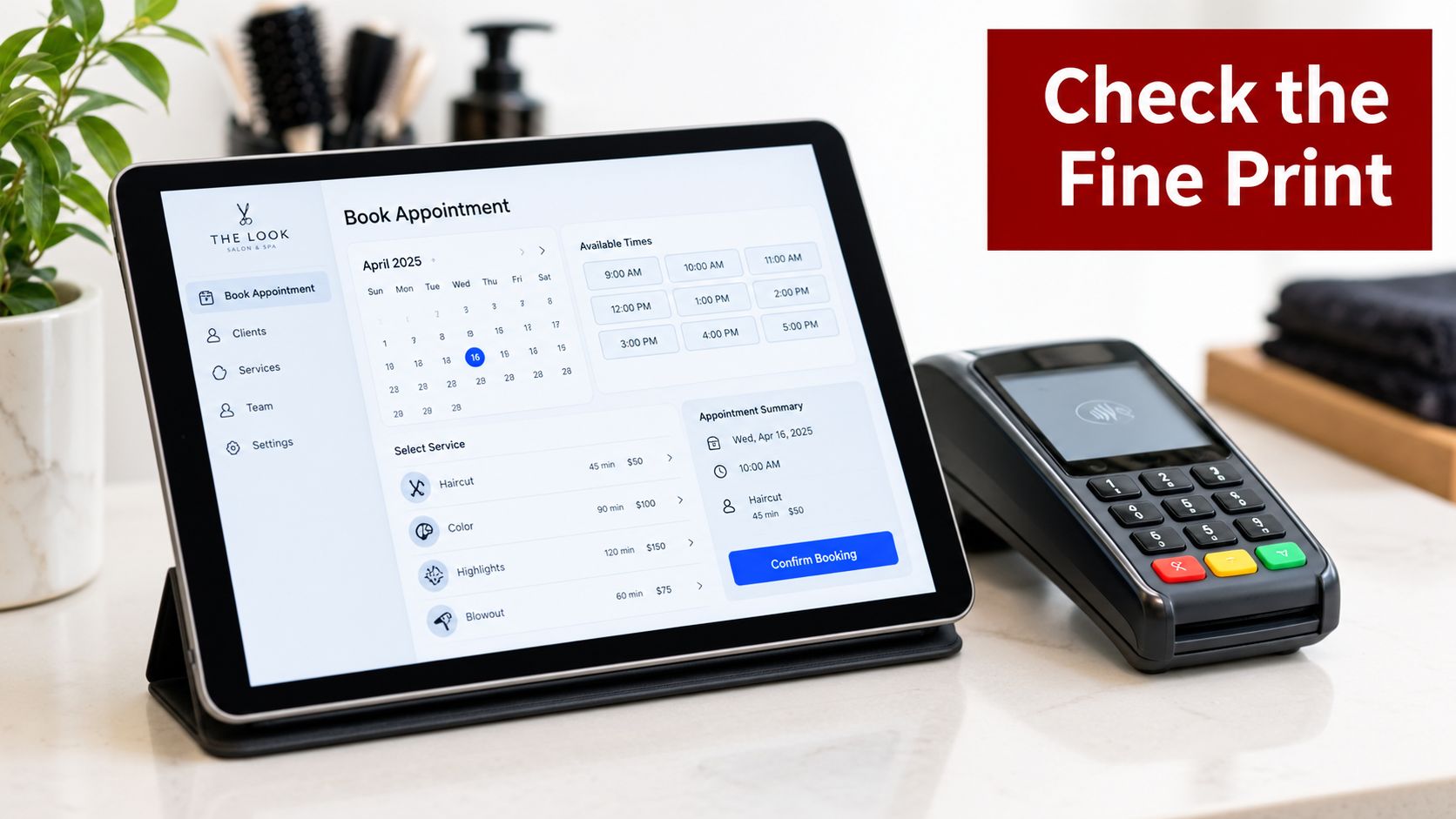
Keep the trigger window tight. For most service businesses, 14 to 21 days is long enough to book the next visit and short enough to preserve the connection between the original service and the reward.
Launching Your First Bounce Back Offer in 30 Days
You don't need a large marketing project. You need one service, one offer, one redemption path, and a calendar reminder for review.
Week one, define the offer
Choose the service that naturally leads to a second visit. Set the expiration window in Square, write the customer message, and create the discount or gift card identifier. Make the front desk script short enough to say while the customer is paying.
Capture screenshots of Marketing > Automated Messages, Items > Gift Cards, and Reports > Sales by Item. Those screens give you a record of what was configured before customers begin redeeming.
Week two, connect attribution
Build the campaign in ViralRef, map the Square gift card SKU or discount identifier, and tag the relevant Square Loyalty behavior so the second appointment can be recognized as part of the campaign. Keep the naming consistent. “Gloss Bounce Back March” is useful. “Promo 4” isn't.
Check the campaign path from the customer record through the offer link and into Square Appointments. If customers need to copy a code manually, remove that step if possible. Guidance on reducing lead response time also applies to return visits. A fast follow-up is more useful than a beautifully written message that arrives too late.
Week three, run a controlled launch
Send the offer to your top 20 repeat clients as a soft launch. Track the redemption manually in a simple sheet while you confirm that the Square transaction, appointment ID, gift card activity, and ViralRef conversion record match.
Monitor the ViralRef tabs named Campaigns, Fraud Screen, and Conversions. Ask two staff members to test redemption on different devices, then void the test transactions and document the correct process.
Week four, roll it out and review it
Send the offer to the full eligible segment. At the end of the review period, examine redemption rate, second-visit lift, and incremental revenue per recipient. Don't change the offer every few days. You need enough completed customer journeys to see whether the second appointment moved.
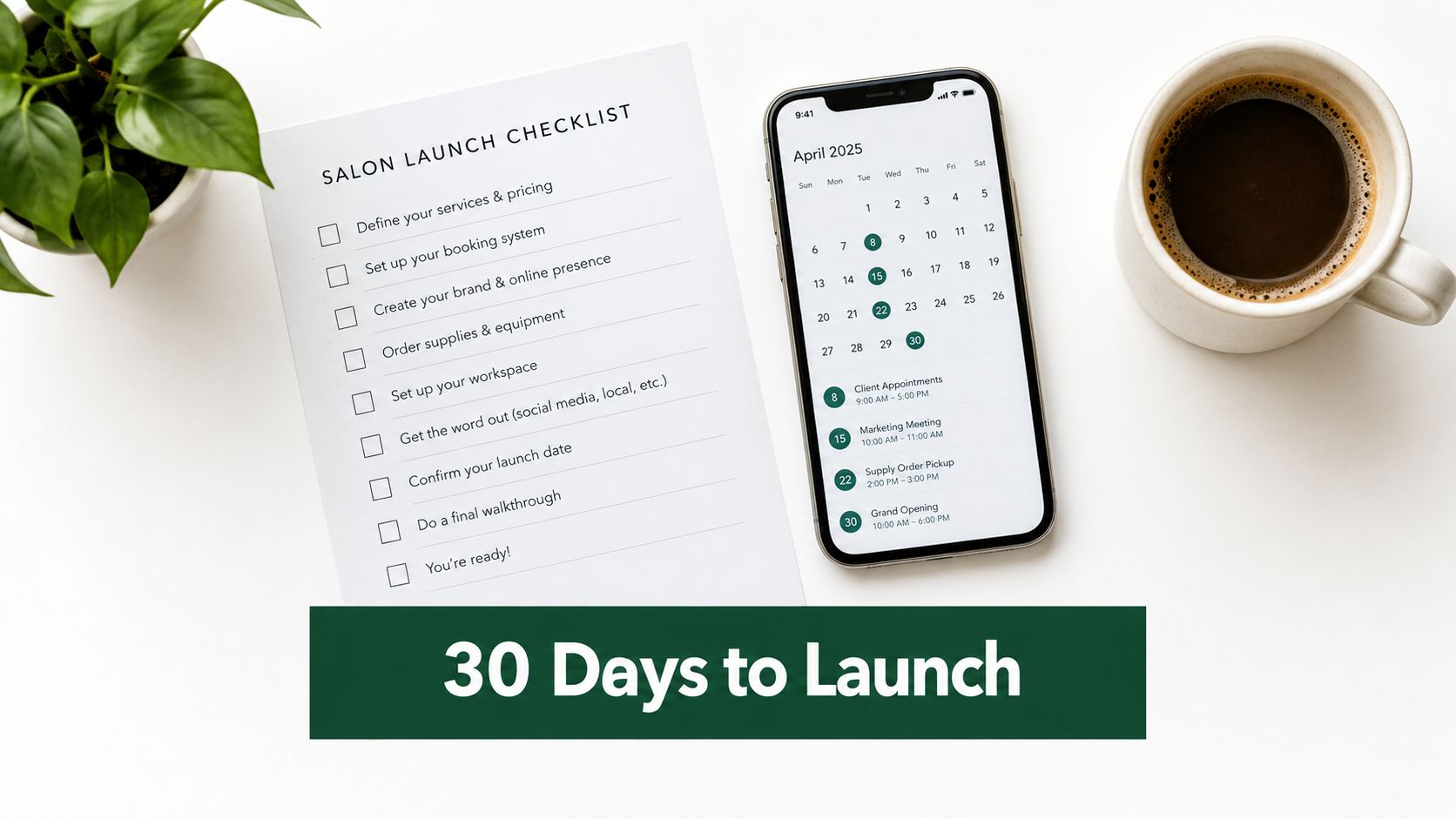
Before month-end books close, reconcile outstanding Square gift card liabilities. A gift card that hasn't been redeemed still represents a balance on the books, even if the campaign no longer accepts it.
Bounce Back Offer Questions Square Owners Ask
Does it cannibalize full-price bookings?
It can. Compare revenue per client before the campaign with revenue per client during the campaign, then inspect whether the offer pulled an appointment forward or replaced a full-price booking. If the client would have booked anyway, the discount reduced revenue. If the client returned sooner or filled a slot that otherwise would have stayed open, the offer created value.
How deep should the discount be?
For many service businesses, owners commonly test 15 to 25 percent, but that range is an editorial starting point, not a universal result. At higher price points, a service upgrade or free add-on often protects the core price better than a straight percentage reduction.
Should it stack with Square Loyalty?
Usually, no. Stacking a Loyalty multiplier with a bounce back reward makes attribution harder and can train regulars to wait for layered incentives. Run one mechanic first, then test a second campaign separately.
What happens after a second-visit no-show?
Apply your normal Square no-show and cancellation policy consistently. Decide before launch whether the bounce back gift card remains available after a no-show, expires, or becomes valid only after a new booking. Don't let front-desk improvisation determine your margin.
The rule is simple: if the second appointment shows up, the offer worked. If it doesn't, study the timing, message, service match, and booking friction before increasing the discount.
ViralRef connects Square payments, customer referrals, gift card rewards, and campaign attribution so your bounce back offer can lead to a booked second appointment and measurable word-of-mouth growth. Visit ViralRef to connect your Square workflow and give every satisfied client a simple way to return and refer someone new.
Related articles
Gift Card Rewards Program: A Square Merchant Playbook
Build a gift card rewards program that fills your salon, barbershop, or studio calendar. Learn design choices, Square setup steps, and KPIs that matter.
Service Business Marketing: A Playbook for Square Merchants
Your complete service business marketing playbook. Learn to attract and retain clients for your salon or studio with local SEO, referrals, and Square.
Small Business Referral Programs: The Square Merchant Guide
Launch successful small business referral programs on Square. A step-by-step guide for salons & spas on rewards, setup, promotion, and automated tracking.