Affiliate Management Platform Guide for Square Merchants
Learn what an affiliate management platform does, which features matter, and how Square merchants can turn referrals into measurable growth
Maria runs a small esthetics studio with four chairs, a waitlist, and a notes app full of customer names. When a regular says, “My friend booked because of me,” Maria types the name down between appointments. Later, she has to remember which friend arrived, whether the booking was completed, and what reward she promised. That system works until several referrals arrive in the same busy week.
For Square merchants, word-of-mouth usually ends at the same place as the sale, Square POS or Square Appointments. An affiliate management platform connects those pieces, so referrals, bookings, payments, rewards, and follow-up don't live in separate notebooks. The result is a clearer way to turn happy clients into new appointments without asking your front desk to reconcile every referral by hand.
Table of Contents
- What an Affiliate Management Platform Actually Does
- Core Features Every Service Business Should Look For
- Real-World Examples From Square-Based Businesses
- How the Platform Connects to Square, Gift Cards, and Coupons
- KPIs That Show Whether Your Referral Program Is Working
- Choosing and Rolling Out the Right Platform
- Common Mistakes and How to Avoid Them
What an Affiliate Management Platform Actually Does
An affiliate management platform is software that tracks who referred a customer, identifies the qualifying purchase, applies the reward rules you set, and records the result. In a salon, barbershop, spa, or studio, “affiliate” doesn't have to mean a large online publisher. It can be a loyal client, a stylist, a front-desk employee, a local influencer, or a nearby business.
The important distinction is simple. A referral program asks people to recommend your business. The platform makes sure the recommendation gets connected to the right customer and payment.
The four jobs behind every referral
A useful platform handles four practical tasks:
-
Capture the referral. A customer shares a personal link, QR code, or referral code. The new client enters the code while booking through Square Appointments or while paying through a Square-connected checkout flow.
-
Attach the referral to the customer. The platform connects the referral to the new customer's record instead of leaving it in a staff member's memory. That record can then be associated with the qualifying appointment, service, or product purchase.
-
Calculate the reward. You decide whether the referrer earns a gift card, account credit, percentage, fixed amount, or another approved reward. The system applies that rule when the transaction qualifies.
-
Show the result. A dashboard replaces the spreadsheet. You can see which clients sent new customers, which campaigns led to completed bookings, and which rewards are waiting for review or payout.
Practical rule: If a referral ends in a Square payment, the platform should be able to recognize that payment without asking your team to copy details into another system.
This connection matters because service businesses often receive referrals in ordinary conversations. A client mentions your facial during a lunch break, sends a QR code in a group chat, and the friend books an appointment that evening. If the tracking tool isn't connected to the system where the appointment and payment are completed, someone has to match those events manually.
For a broader comparison of software categories and workflows, the guide to top affiliate management solutions can help you understand what generic platforms usually offer. Square merchants should then ask a more specific question: does the tool fit the way my shop already accepts bookings and payments? ViralRef's explanation of a referral marketing platform is useful for separating general affiliate terminology from the everyday needs of a local service business.
Core Features Every Service Business Should Look For
A feature list only helps when it answers a real shop problem. For a Square merchant, the right platform should make tracking, commission decisions, staff management, and fraud review easier without forcing the owner to become a technical administrator.
Tracking that follows the customer
Suppose a new client enters a barber's referral code while booking a haircut through Square Appointments. The platform should connect that code to the customer's record and recognize later qualifying activity according to the program's rules. If that client later buys a retail product at Square POS, the owner can decide whether that purchase counts, rather than relying on a forgotten conversation at the front desk.
The key is not recording a click. It's connecting the referral to a real customer and a completed transaction. Ask whether the system supports referral links, QR codes, and codes that staff can recognize at checkout. The commission tracking software guide offers more detail on how that connection affects accurate rewards.
Commission rules that match your margins
A barbershop might offer a fixed reward for a first-time client, then use a percentage for a larger package. For example, the owner could set a $10 reward for a new client and 15% on the first package purchase, using separate rules for those events. Those amounts are examples of a rule structure you choose, not a universal recommendation.
A useful rule engine should support:
- Flat rewards: A fixed credit for a qualifying new customer.
- Percentage rewards: A share of an eligible service or package.
- Tiered rewards: Different rates for different performance levels.
- Recurring rules: Rewards for qualifying repeat purchases when your program allows them.
The owner should also be able to define exclusions. A heavily discounted service, refunded order, or non-qualifying gift card purchase shouldn't create a commission.
Roles and groups for different people
A fitness studio may have stylists, front-desk staff, and outside ambassadors promoting the same business. They don't necessarily deserve the same reward. Groups let the owner assign one rule to employees, another to clients, and another to influencers.
This also keeps reporting readable. Instead of one long affiliate list, you can review which group drives bookings and adjust the program without changing every person's settings.
Fraud controls that protect ordinary rewards
Fraud doesn't always look dramatic. It can be a staff member's friend creating several throwaway email addresses, claiming a reward for their own purchase, or submitting the same referral through multiple channels.
Look for duplicate-account flags, self-referral blocks, and velocity checks. More advanced systems can validate signals such as IP reputation, device fingerprints, behavior patterns, referrer integrity, and server-to-server postbacks before a commission reaches the payout ledger, as described in this affiliate fraud detection software buyer guide.
The best approach is review, not automatic punishment. Practical thresholds can hold unusual activity for manual inspection, including cases where more than 15% of conversions happen in under 60 seconds or over 12% of clicks come from one IP, based on the affiliate attribution fraud prevention guidance. Legitimate referrals stay available for review while suspicious rewards don't get paid immediately.
Real-World Examples From Square-Based Businesses
The same affiliate management platform can solve very different problems depending on how customers enter a service business. These examples use realistic operating situations, with results described qualitatively rather than promising a guaranteed lift.
Diego's two-chair barbershop
Diego gets many walk-ins. His barbers are good at asking satisfied clients to tell a friend, but the conversation usually ends when the client leaves. Diego adds a QR code to receipts and places it near the checkout area. A client can scan it before walking out and send a personal referral link by text.
When the friend books or pays through the connected Square flow, Diego can see the referral tied to the customer instead of asking the barber to remember the name. Within the first month, he notices that referrals are no longer limited to clients who happen to mention a friend's name at checkout. The referral marketing examples show how similar ideas can be adapted to different customer journeys.
A boutique fitness studio
The studio uses Square Appointments for class bookings and works with local influencers. One influencer claims credit for several signups that members say came from a different source. Without clear attribution rules, the owner has to decide whom to believe.
The owner sets an attribution window, defines the qualifying booking event, and sends unusual patterns for review. The platform's records give the studio a consistent way to settle disputes instead of changing the answer based on who sends the loudest message. During the first month, the owner gets a cleaner view of which partnerships produce completed bookings.
A multi-location spa
A spa with several locations has front-desk concierges and estheticians who both bring in friends. Corporate wants one rule for concierges and another for estheticians, while each location manager needs to see local results.
Groups and roles separate those responsibilities. Corporate can manage the program centrally, and managers can review activity without mixing every participant into one payout category. By the end of the first month, the spa has a consistent reward process across locations and fewer conversations about who should receive credit.
How the Platform Connects to Square, Gift Cards, and Coupons
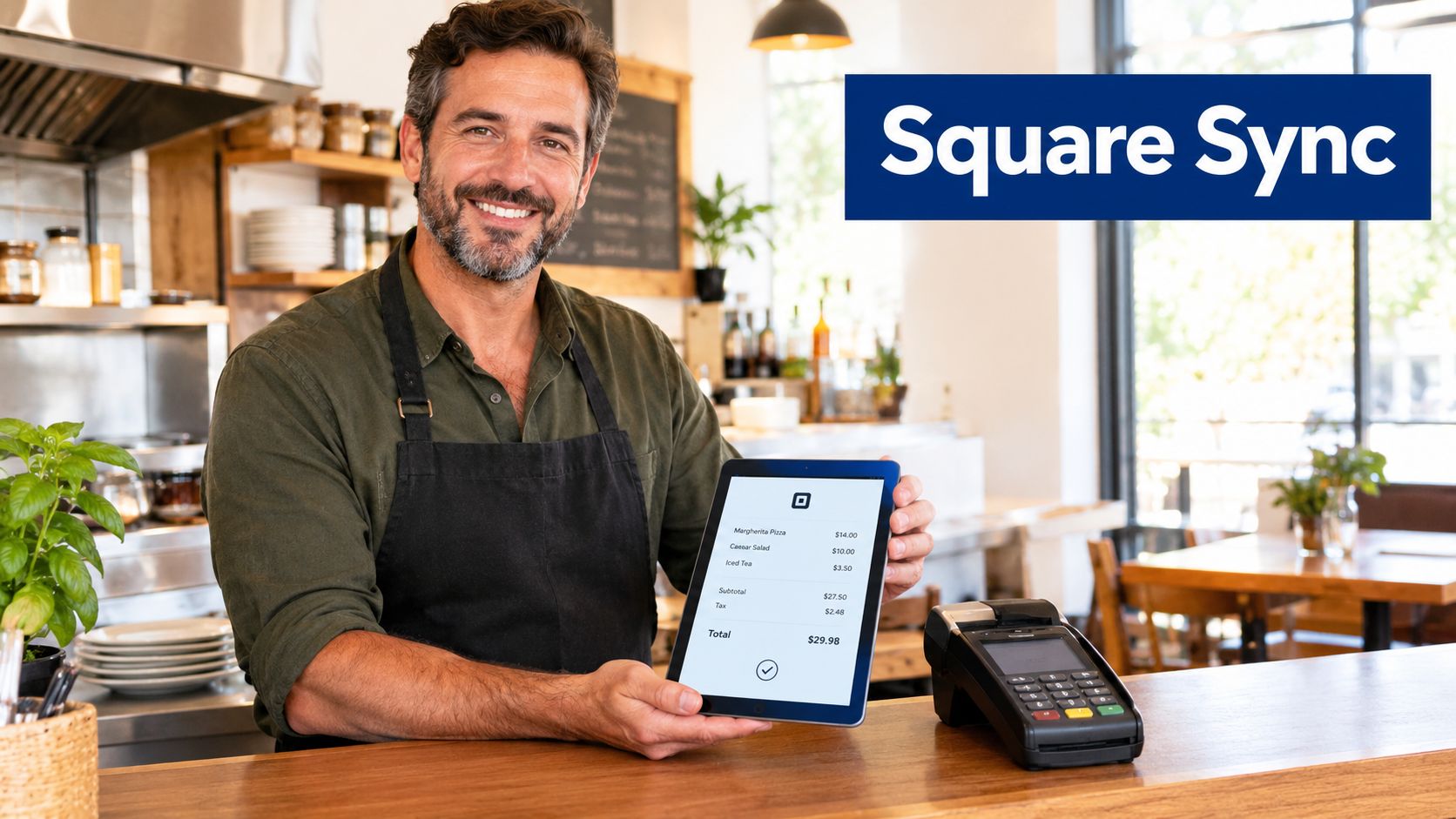
The value of a Square-connected referral system comes from what happens after the customer pays. Square Appointments already supports online booking, booking websites, client portals, reminders, confirmations, appointment tracking, payment processing, and no-show protection, according to this Square Appointments review. It also supports booking from Instagram and Facebook, which matters when a local client discovers your business on a phone.
What happens at each Square touchpoint
Start with the Square POS connection. After you grant the required permissions, the referral platform can use the relevant order, payment, and customer information rather than asking you to enter the same sale twice. Your team still takes payment in the familiar Square workflow, while the referral system records the event for attribution.
Square Appointments handles the booking side. A referred customer schedules a service, attends the appointment, and completes payment. The platform can treat the completed booking or settled payment as the event that activates the referral rule, depending on the campaign you create.
Gift cards and coupons need clear definitions. You might allow a referral reward when a new client redeems a coupon for a full-price service, while excluding a gift card purchase because the recipient hasn't visited yet. You might also allow the recipient's first redemption to qualify. The important point is to set the rule before launch, then test it with the exact products and discounts your shop uses.
Square Loyalty can sit alongside referrals. A customer can earn loyalty points under your existing loyalty setup while the platform applies a separate referral rule, provided your campaign rules explain whether stacking is allowed.
The payment confirmation
A settled Square payment can send a confirmation to the platform through a webhook. The platform then checks the referral code, applies the commission rule, and records the conversion. This reduces the delay between payment and visibility in the dashboard.
Before you invite clients, use a sandbox or test environment where available. Run a new booking, a completed payment, a refund, a coupon redemption, and a gift card scenario. The Square connection documentation can help you review the setup points before real commissions are issued.
KPIs That Show Whether Your Referral Program Is Working
A referral dashboard should help you decide what to change, not give you more numbers to admire. For a shop processing a few hundred transactions a month, five measures can keep the review manageable.
Referral conversion rate tells you how many referred people book or buy. If many people click a link but few complete a booking, check the booking page, the offer, and the steps between referral and payment.
Average first-visit value compares what referred customers spend on their first visit with what non-referred customers spend. If referred clients arrive for a low-cost service but add products or packages, the program may deserve a stronger reward because the new customer is valuable.
Commission cost as a share of referred revenue shows whether the reward fits your margin. If the cost rises too far, move from a broad percentage to a tiered rule or limit the reward to the first qualifying visit.
Reward redemption rate tells you whether clients use what they earn. Low redemption can mean the reward is confusing, difficult to access, or irrelevant to the next visit.
Fraud flag rate shows how often the system sends referrals for review. A rising rate may point to duplicate accounts, self-referrals, or an offer that people can exploit.
A practical dashboard for Square merchants
| KPI | What It Measures | Healthy Range for Service Shops | Action If Off Target |
|---|---|---|---|
| Referral conversion rate | Referred visitors who book or buy | Set a baseline from your own first campaign | Simplify booking and clarify the offer |
| Average first-visit value | First purchase value from referred customers | Compare with non-referred customers | Adjust rewards around high-value services |
| Commission cost | Reward expense relative to referred revenue | Keep it inside your planned margin | Use tiers or restrict qualifying items |
| Reward redemption rate | Whether customers use earned rewards | Look for regular, understandable use | Make rewards easier to find and redeem |
| Fraud flag rate | Referrals held for unusual activity | Review patterns rather than chasing a fixed number | Investigate duplicates and self-referrals |
The platform should pull these figures from the Square-connected activity as transactions happen. That lets you review the program during a quiet afternoon instead of waiting for a monthly spreadsheet. Use the reporting and analytics guide to think about which reports are useful for daily decisions.
Choosing and Rolling Out the Right Platform
Start with the connection, not the feature count. A Square-native referral platform should connect to the account and use the payment and customer flow directly. A generic tool that depends on manual exports may leave your team matching bookings, refunds, and commissions in a spreadsheet.
Use this checklist when comparing vendors:
| Decision area | What to ask | ViralRef checklist result |
|---|---|---|
| Square connection | Does the platform connect directly to Square POS and Appointments? | Built natively for Square merchants |
| Commission rules | Can you create tiered rates and time-bound campaigns? | Supports commission tiers and campaign incentives |
| Groups and roles | Can stylists, clients, staff, and influencers use different rules? | Supports affiliate roles and groups |
| Fraud review | Can the system flag duplicates, self-referrals, and rapid conversions? | Includes automated fraud screening and review flags |
| Rewards | Can you use gift cards, coupons, or account credits? | Supports flexible reward types connected to Square workflows |
ViralRef is the only referral program built natively for Square, and its Affiliates area supports roles such as client, influencer, and agency, along with groups and commission tiers. It also provides referral links, QR sharing, a phone-accessible portal, Square-connected attribution, gift card rewards, coupons, and fraud review tools. Treat that as a checklist item to verify in a demonstration, not as a reason to skip testing your own workflow.

A rollout that won't overwhelm your team
Connect the Square account first, then import or seed the customer list according to the platform's available setup process. Choose one campaign with one clear reward. A simple first campaign is easier for your staff to explain and easier for you to audit.
Train two staff members before involving everyone. Give them a short script, show them where to find the referral link or QR code, and explain what happens after a new client pays. Then review the dashboard after two weeks, looking for missing payments, unexpected rewards, customer confusion, and suspicious patterns.
Don't launch every audience at once. Test with regular clients first, correct the rules, and only then add staff, influencers, or multiple locations.
Common Mistakes and How to Avoid Them
Most referral programs don't fail because the owner lacks enthusiasm. They fail because the offer is unclear, staff members don't mention it, or the rules don't match the way customers pay.
Mistake one, choosing a reward without checking the ticket
If your average service ticket is $65, a fixed reward or percentage should leave room for labor, supplies, payment costs, and discounts. A 15% reward on a $65 service would be $9.75, before considering any other promotion. Use that calculation as a planning example, then choose an amount your own margin can support.
Write the reward in one sentence. “Your friend gets a first-visit credit, and you receive a credit after their completed payment” is easier to explain than a paragraph of conditions.
Mistake two, leaving the front desk out
Your staff doesn't need a marketing lecture. They need a short prompt they can use naturally:
- After a compliment: “I'm glad you liked it. You can share this QR code with a friend.”
- At checkout: “Your referral link is available if someone asks where you go.”
- After a booking: “Your friend can use your link when booking through our Square page.”
Put the same wording near Square POS so every team member gives consistent information.
Mistake three, ignoring competing referrals
A new client may mention two people, click one link, and use another person's code. Decide in advance whether the first recorded referral, the last valid referral, or a manual review gets credit. Put the rule in the program description and let the platform log the decision.
Mistake four, paying for suspicious activity
Repeated email patterns, self-referrals, rapid conversions, and duplicate accounts deserve review. Don't automatically reject every flag, because a real household or workplace can share details. Hold the reward, inspect the customer and payment records, then approve or deny it consistently.
Start with one campaign, brief the front desk, test ordinary and unusual transactions, and check the dashboard throughout the first 30 days. That period is for tuning the offer and rules, not blaming the software when a customer misunderstands a coupon or a refund changes the result.
ViralRef gives Square merchants a native way to track referrals from shared links and QR codes through Square POS and Square Appointments, then apply gift card or coupon rewards while showing commissions and referral quality in one dashboard. Visit ViralRef to connect your Square account and test a simple client referral campaign with your salon, barbershop, spa, or studio.
Related articles
Referral Management Software: A Guide for Square Merchants
Learn what referral management software does, which features matter for salons, spas, and studios on Square, and how to pick, launch, and measure a program that
Referral Marketing Platform Guide for Square Merchants
Learn what a referral marketing platform does, key features, ROI and how Square salons and studios turn word-of-mouth into bookings.
Affiliate Marketing on Pinterest for Square Merchants
Learn affiliate marketing on Pinterest with our guide for Square merchants. Turn salon, spa, or studio pins into new bookings and track referrals automatically.